Not every museum in the city — only those worth the trip. Every entry carries our own value rating, what to see, a minimum route, when to come and what it costs.
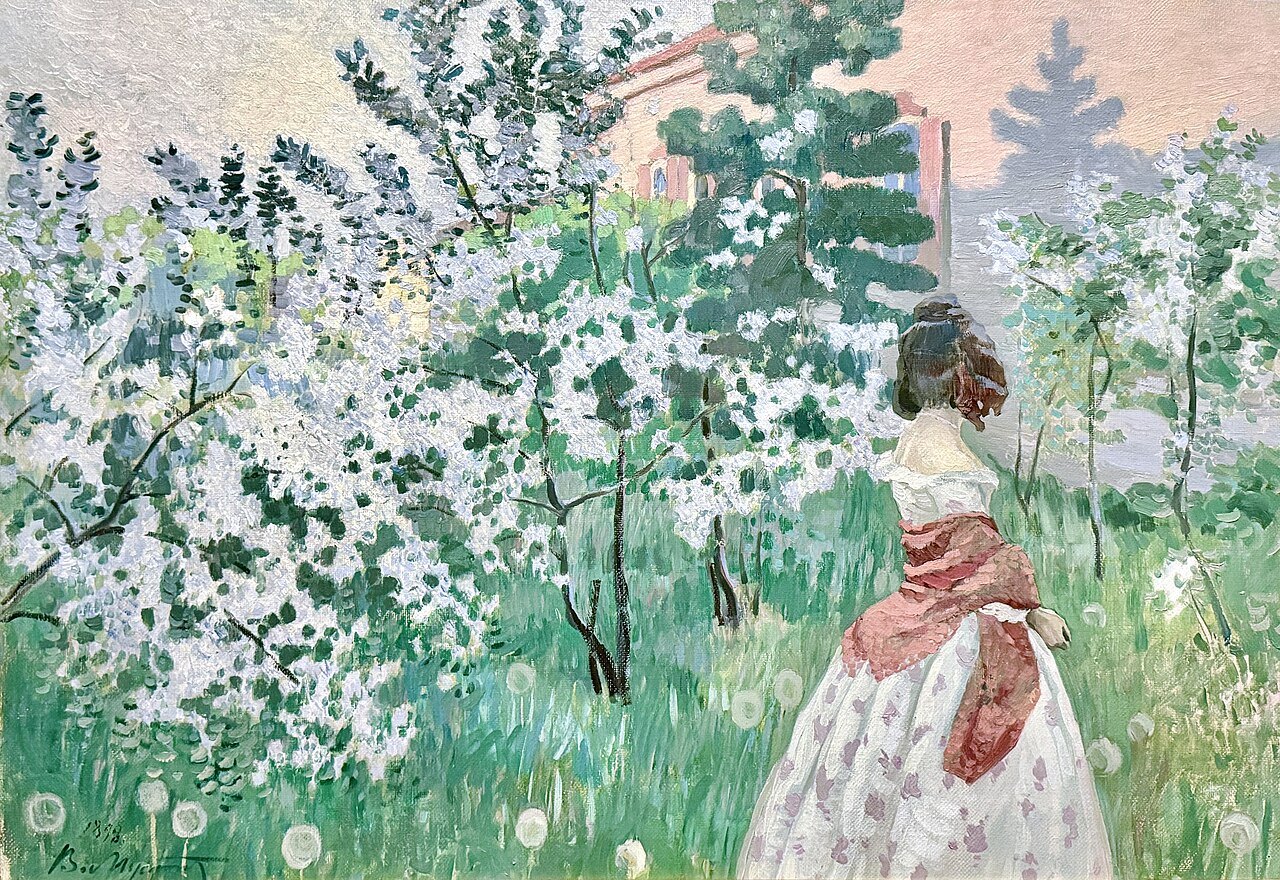
Over 140 works from twenty collections: The Pool, The Emerald Necklace and studies almost never shown. Russian Symbolism is one of the summits at which art lifts a person beyond himself; a retrospective this full comes once in a generation.
Over seven hundred objects: sculpture and painting of Russian Buddhism, almost none of it shown before. More than a hundred sculptures were conserved for the opening.
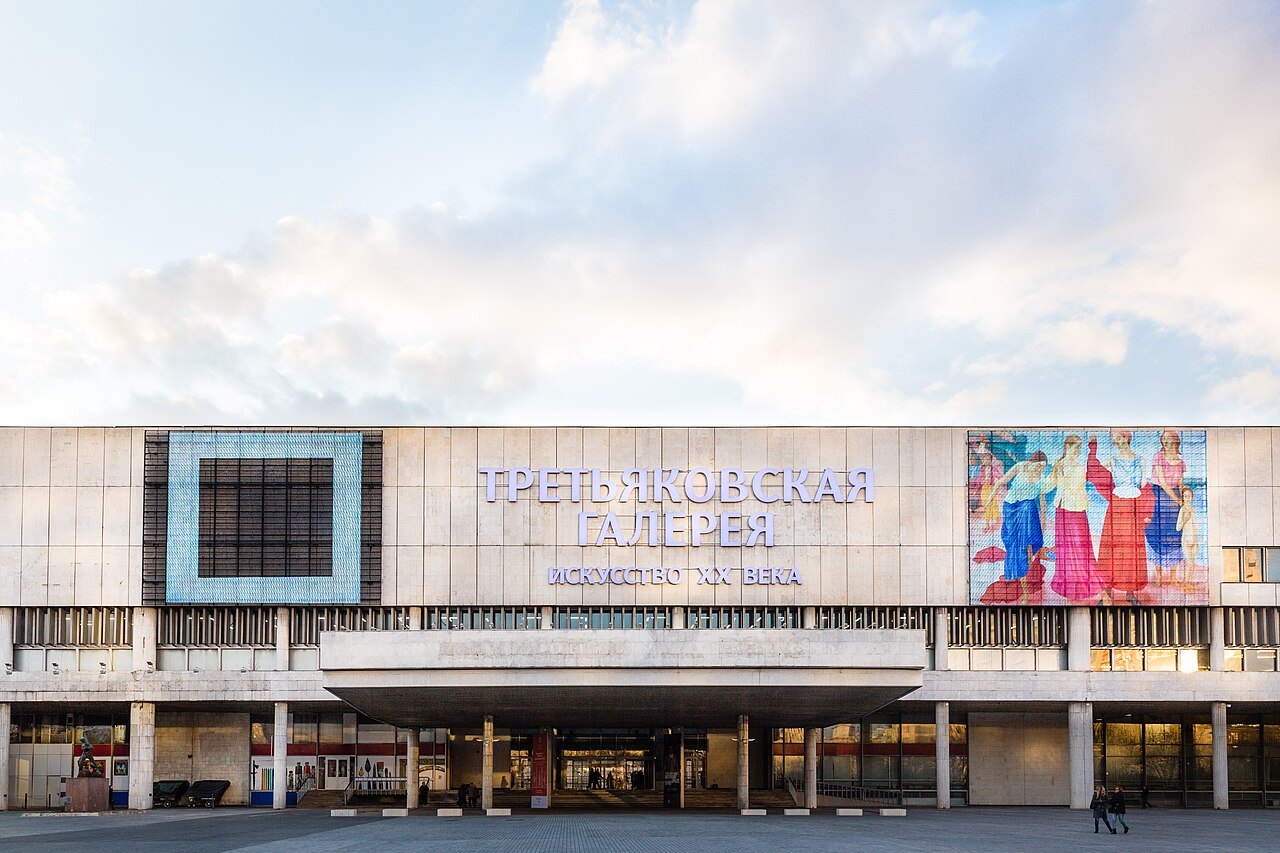
The New Tretyakov?Why this museumThe Russian avant-garde is the one Russian artistic system to enter the world canon on equal terms, and its largest collection is here. MoMA and the Pompidou show Malevich and Tatlin torn from their setting; here they hang beside what they rebelled against, which changes the reading.
6+With childrenThe avant-garde reaches children more easily than the classics: strong colour, plain shapes. From 6; there are children’s routes and workshops.wheelchairStep-free accessThe museum — step-free. A modern building: ramps, lifts, wide doorways, accessible toilets. Wheelchairs are lent.
Getting there — step-free. Oktyabrskaya and Park Kultury have no lifts. There is convenient parking at the door and low-floor buses along Krymsky Val. Moscow metro stations almost never have lifts to the platform, except on the Big Circle line and the MCC. A wheelchair user is better served by the surface buses, which are low-floor across the centre.2–3 hours
The Tretyakov Gallery building on Krymsky Val: the permanent display Art of the 20th Century and the gallery’s main temporary shows. Officially named the New Tretyakov since 2018.
The building. Built 1979–1983 by Y. Sheverdyaev and N. Sukoyan, shared with the Central House of Artists.
Good to know. A separate ticket from Lavrushinsky Lane.
What to see
Malevich’s Black Square, Petrov-Vodkin’s Bathing of a Red Horse, work by Kandinsky, Chagall, Goncharova and Larionov, the model of Tatlin’s Tower. Next door: the Muzeon park of dismantled Soviet monuments.
Minimum route — 2–3 hours на самое важное
Start with the Black Square and the avant-garde hall — Kandinsky, Goncharova, Larionov, Tatlin’s Tower. Then Bathing of a Red Horse. Leave time for the temporary show: the gallery’s biggest projects are here.
Work by the sculptor who carved quebracho and algarrobo: in his hands wood holds shapes impossible in marble.
№ 20
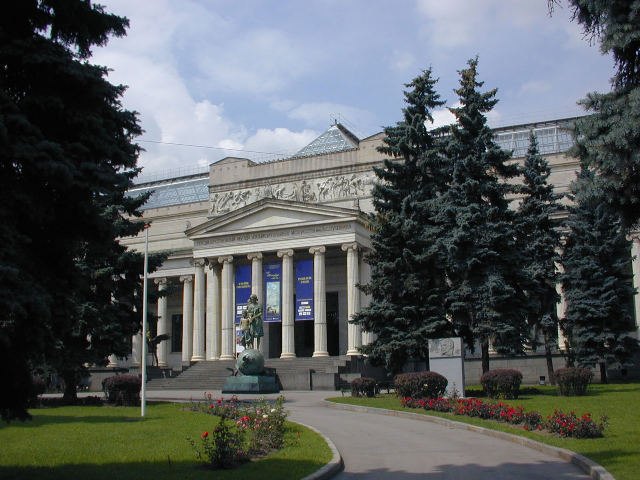
The Pushkin State Museum of Fine Arts?Why this museumThe Louvre and the Metropolitan hold more originals; what is unique is Tsvetaev’s cast collection — the only large teaching museum of the history of art in the world still intact and still working as intended. In Europe such collections went into storage in the 20th century. Add the Fayum portraits and objects from Schliemann’s Trojan hoards.
7+With childrenChildren read the plaster casts as “real giants”, and the Egyptian hall never fails. From 7; the museum has a strong children’s centre.wheelchairStep-free accessThe museum — partly. The 1912 building: there is a platform lift at the entrance, but not every hall connects without steps. The Gallery at Volkhonka 14 is fully accessible.
Getting there — partly. Kropotkinskaya has no lift. The nearest drop-off is on Volkhonka. Moscow metro stations almost never have lifts to the platform, except on the Big Circle line and the MCC. A wheelchair user is better served by the surface buses, which are low-floor across the centre.3 hours
The second largest collection of foreign art in Russia. Conceived by Ivan Tsvetaev as a teaching Museum of Fine Arts for Moscow University and opened on 31 May 1912.
The building. A building in the form of an antique temple on a high podium, by Roman Klein, 1898–1912.
Good to know. The museum is building a “museum town”; part of the buildings on Volkhonka are closed for works.
What to see
The teaching collection of plaster casts after antique and Renaissance sculpture — Tsvetaev’s idea, unmatched for completeness; the Fayum portraits; objects from Priam’s Treasure found by Schliemann at Troy; the Egyptian collection. The French 19th–20th century is in the Gallery at Volkhonka 14, on a separate ticket.
Minimum route — 3 hours на самое важное
The Italian Court and the casts — the reason the museum was built. Then the Fayum portraits, the Egyptian hall and Priam’s Treasure.
Over seven hundred objects: sculpture and painting of Russian Buddhism, almost none of it shown before. More than a hundred sculptures were conserved for the opening.
№ 6
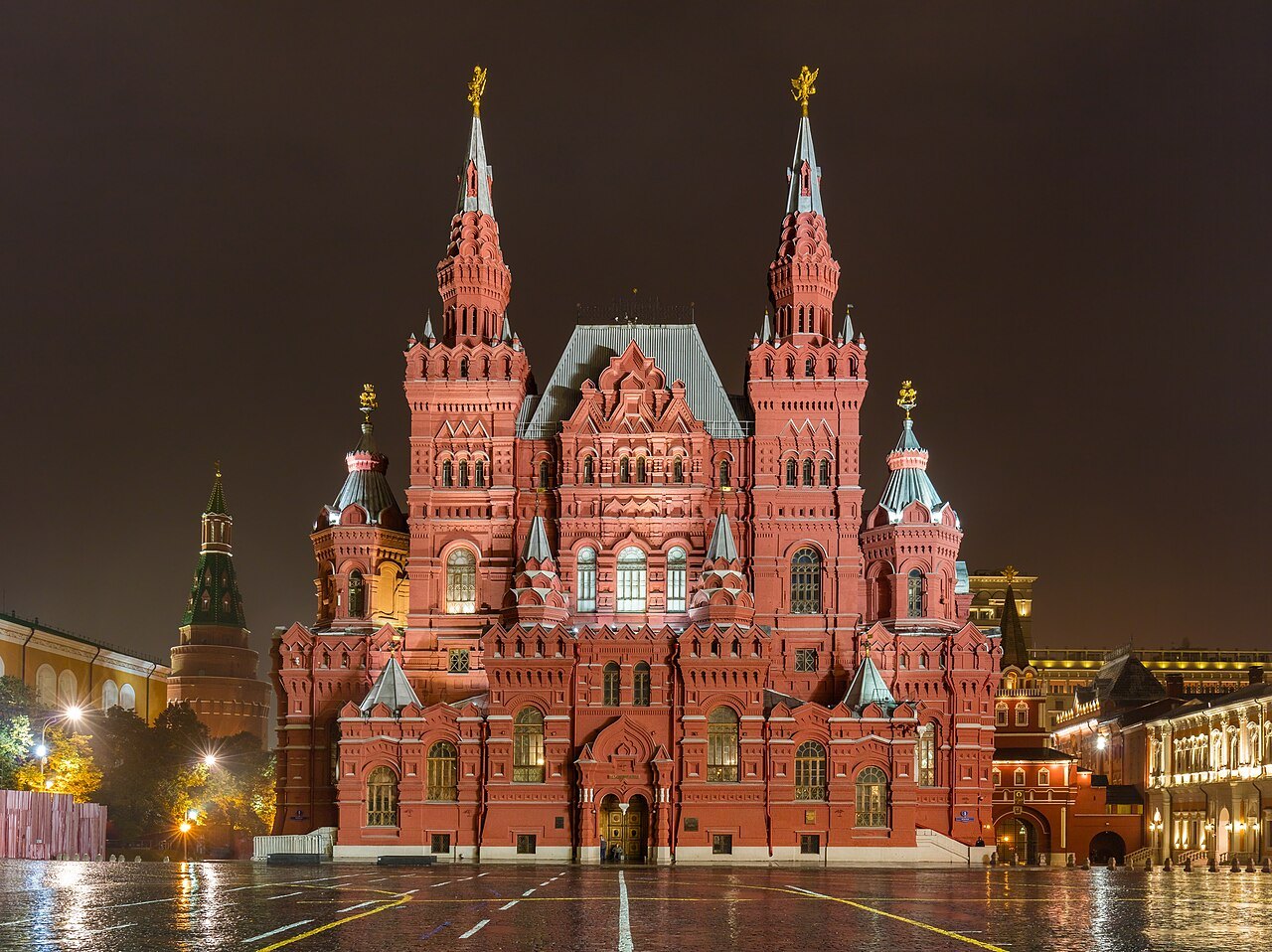
The State Historical Museum?Why this museumA collection of material sources on Russian history unmatched for completeness: archaeology, numismatics, arms and manuscripts in one sequence, five million objects. And a rarity of another kind — Sherwood’s fully preserved Russian Revival interior, a monument in itself.
9+With childrenBelow nine, forty halls are exhausting. Older children do well if you come for one theme — arms, hoards, costume.wheelchairStep-free accessThe museum — partly. There is a ramp and a lift, but part of the first floor is reached by the old stairs. Telephone ahead: staff will take you round.
Getting there — partly. Neither Okhotny Ryad nor Teatralnaya has a lift. By wheelchair, surface transport to Red Square or a taxi. Moscow metro stations almost never have lifts to the platform, except on the Big Circle line and the MCC. A wheelchair user is better served by the surface buses, which are low-floor across the centre.3 hours
Russia’s main national museum: about 5 million objects and 15 million sheets of documents, from the Stone Age to the 20th century across forty halls.
The building. Built 1875–1883 by Vladimir Sherwood and the engineer Anatoly Semyonov in the Russian Revival style.
Good to know. St Basil’s Cathedral, the Romanov Chambers and the Museum of the Patriotic War of 1812 belong to the museum; their tickets are separate.
What to see
A dugout boat some 3,500 years old; the Mstislav Gospel of the early 12th century; the helmet of Prince Yaroslav Vsevolodovich; a Blaeu globe; personal belongings of Peter the Great. Look up: the halls themselves are painted after Old Russian models and count as an exhibit.
Minimum route — 3 hours на самое важное
Go round from hall 1: the dugout boat, then the Mstislav Gospel and the helmet of Yaroslav Vsevolodovich, on to the Blaeu globe and Peter the Great.
Money in The Master and Margarita: ancient Judaea and Moscow of the 1920s–30s, set object against object. For Bulgakov’s 135th anniversary.
№ 1
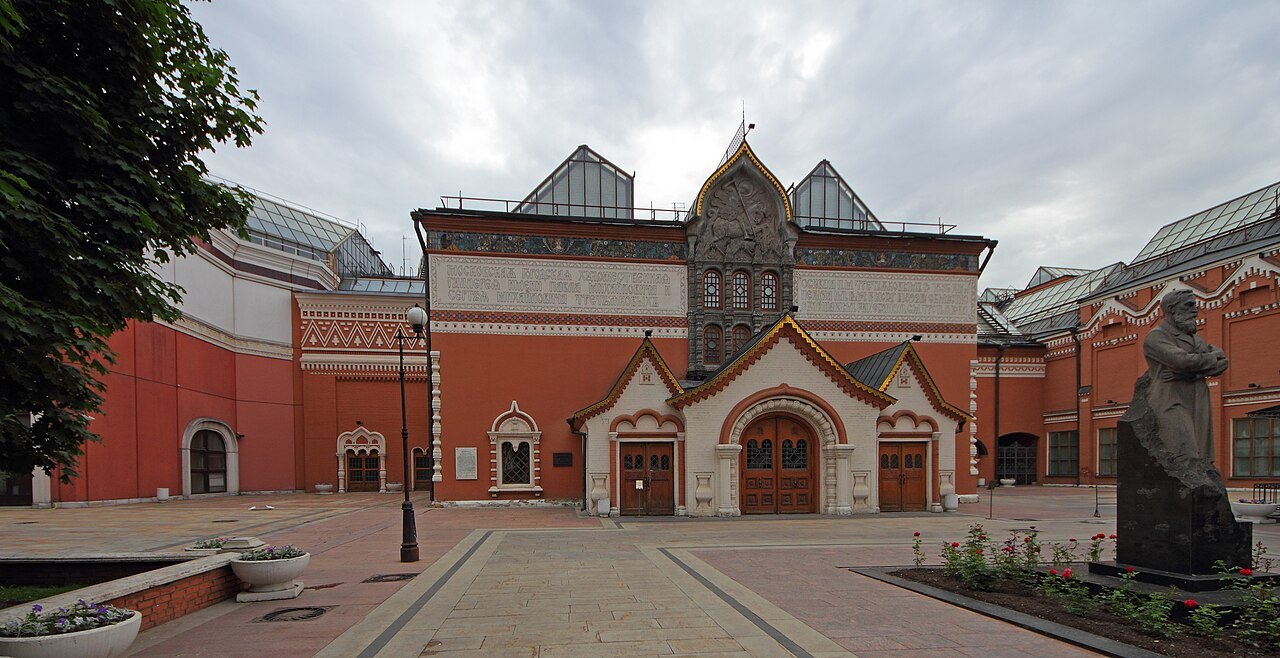
The State Tretyakov Gallery?Why this museumRussian art of the 11th to early 20th century is nowhere else assembled so fully — only the Russian Museum compares. But the canon was formed here: Tretyakov bought from living artists what he himself thought mattered, and one man’s private judgement became what we now call the Russian school. Seeing the 19th century elsewhere means seeing fragments.
8+With childrenChildren under school age get bored: the painting needs explaining. From 8 there are children’s tours and game guides.wheelchairStep-free accessThe museum — step-free. Ramp at the entrance, lifts between floors, wheelchairs lent free at the door, accessible toilets.
Getting there — partly. Tretyakovskaya has no lift. A bus to the “Tretyakov Gallery” stop or a taxi to Lavrushinsky is easier. Moscow metro stations almost never have lifts to the platform, except on the Big Circle line and the MCC. A wheelchair user is better served by the surface buses, which are low-floor across the centre.2–3 hours
The largest collection of Russian art of the 11th to early 20th century. It began with Pavel Tretyakov, who bought his first paintings in 1856 and gave the collection to Moscow in 1892.
The building. Bought by the Tretyakov family in 1851; extensions of 1873–1904. The fairy-tale façade was drawn by Viktor Vasnetsov in 1902–1904.
Good to know. The gallery has three buildings: the historic one in Lavrushinsky, the New Tretyakov on Krymsky Val and the Kadashevskaya Embankment wing opened in 2024. Each needs its own ticket; a combined one exists.
What to see
Ivanov’s The Appearance of Christ Before the People in its own hall; Surikov’s Boyarynya Morozova and Morning of the Streltsy Execution; Repin’s Ivan the Terrible and His Son; Serov’s Girl with Peaches; Vasnetsov’s Bogatyrs; the icon halls. Rublev’s Trinity is no longer here: it was handed to the Church in 2023.
Minimum route — 2–3 hours на самое важное
Hall 10 — Ivanov’s Appearance of Christ with its studies. Then halls 25–26: Boyarynya Morozova and Morning of the Streltsy Execution by Surikov, on to Repin’s Ivan the Terrible and Serov’s Girl with Peaches. Finish with the icons, halls 56–62.
Entry and box office close an hour before the museum. Timed tickets — better bought online in advance.
Tickets
Adults 700 ₽. Students and pensioners of Russia and the EAEU 400 ₽. Children 7–17 350 ₽. Under 7 and some categories free.
билеты онлайнвход по сеансам
When to go
Weekday mornings at 10:00 the halls are nearly empty. Worst: weekend afternoons. Timed entry, so no queue outside, but slots for a popular show go a week ahead.
More than 150 sheets that almost never leave the store: pastel sheds under light and movement and is rarely shown. Halls 49–54.
№ 54
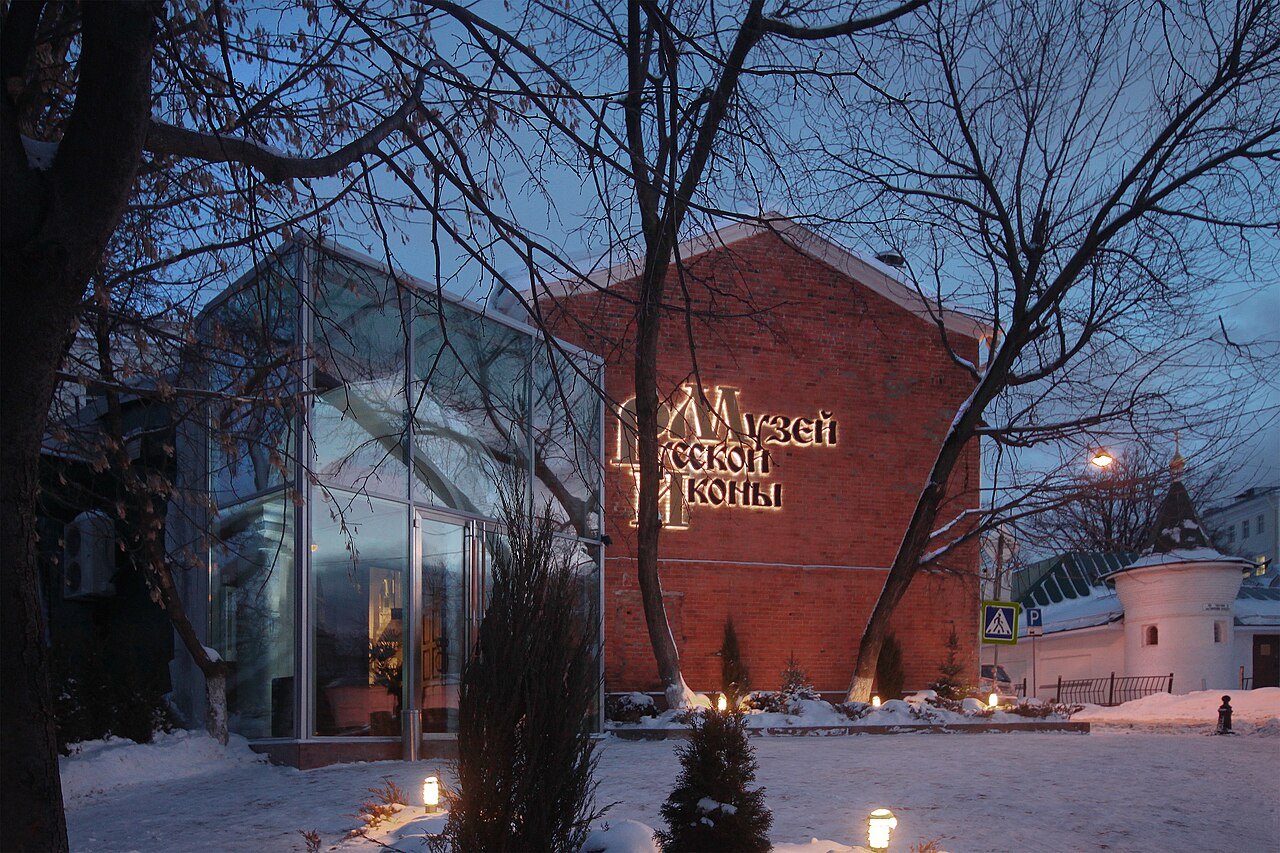
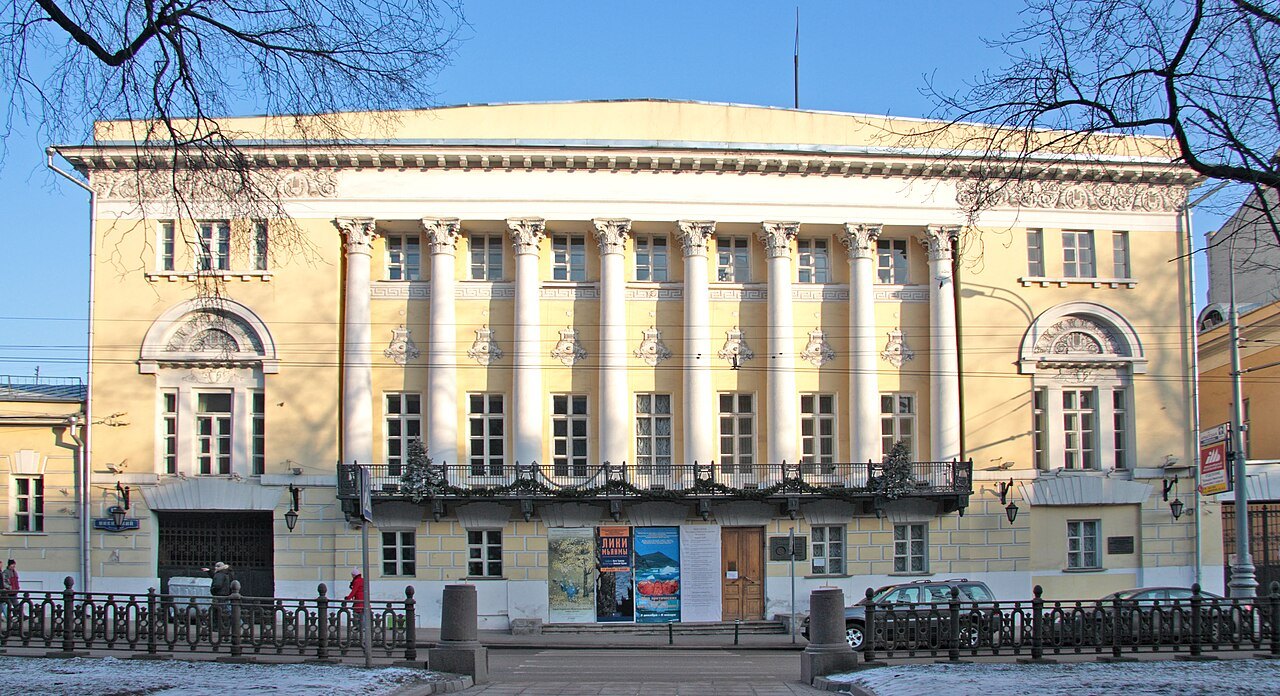
Mikhail Abramov Museum of the Russian Icon?Why this museumFor Ethiopian Christian art it is the only collection in Russia; for the Russian icon it competes with state museums. Add a circumstance almost unheard of anywhere in the world for a collection of this level: admission is free.
adultsWith childrenIcons say almost nothing to children; come as an adult.wheelchairStep-free accessThe museum — step-free. A lift to all four floors, level floors, an accessible toilet. Entry is free, and so is the companion’s.
Getting there — step-free. Taganskaya has no lift. There is a parking bay on Goncharnaya. Moscow metro stations almost never have lifts to the platform, except on the Big Circle line and the MCC. A wheelchair user is better served by the surface buses, which are low-floor across the centre.1.5 hours
Museum of the Russian icon, CC BY-SA 3.0 · Викисклад
Reference
The largest private collection of Eastern Christian art in Russia: about five thousand items on four floors. Founded in 2006 by the entrepreneur Mikhail Abramov, who died in 2019; the museum works on and keeps entry free.
The building. A town house on the Taganka hill, converted for the museum.
Good to know. The only museum of this level in Moscow that you enter free and without a ticket.
What to see
The Russian icon of the 14th to 20th century, from Novgorod panels to Old Believer painting; Ethiopian Christian art, the only such collection in Russia; a reconstructed iconostasis and post-Byzantine Greek icons.
Minimum route — 1.5 hours на самое важное
Go up floor by floor: Greek and Ethiopian art, then the Russian icon by century. Do not miss the iconostasis and the Old Believer hall.
Сведения сверены 15 августа 2026 года, источник — открытые источники.
№ 51
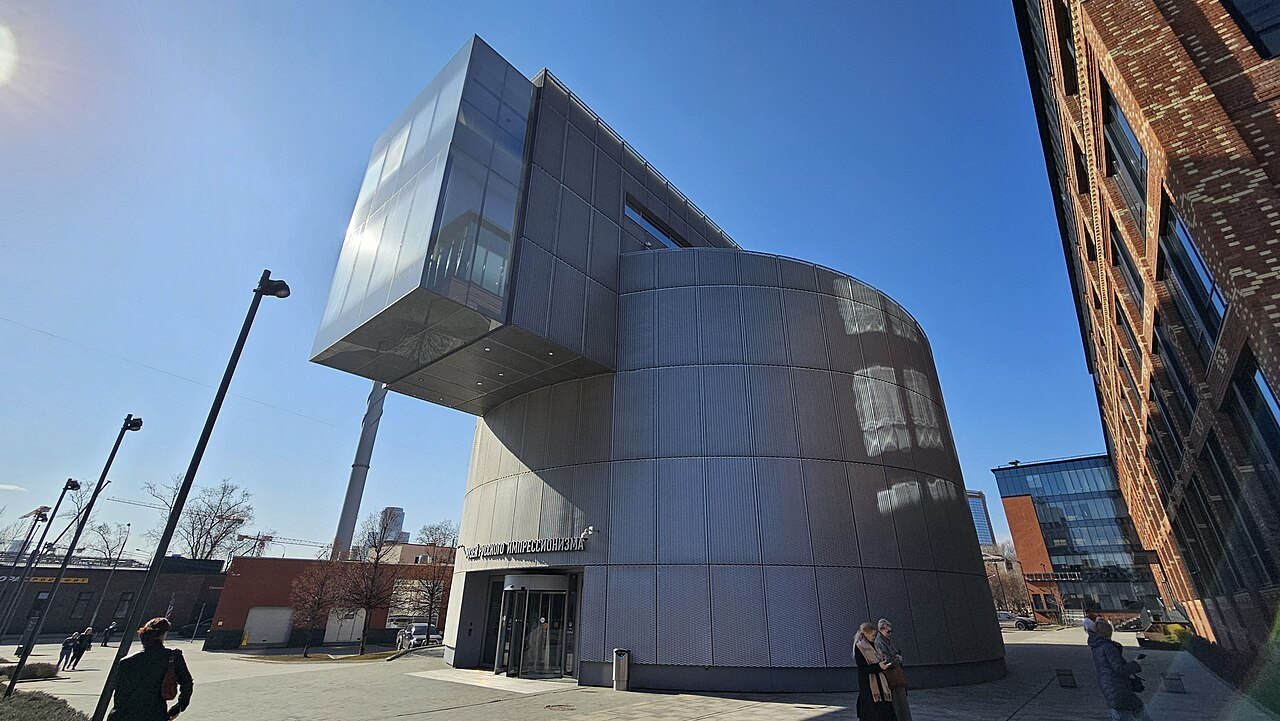
Museum of Russian Impressionism?Why this museumThe term “Russian impressionism” is contested, and this is the only institution that investigates rather than illustrates it. The value is the exhibition programme: works come here from private collections that would otherwise never be seen.
8+With childrenA small display and good children’s programmes at weekends.wheelchairStep-free accessThe museum — step-free. Converted for the museum: lift, level floors, accessible toilet.
Getting there — step-free. Belorusskaya has no lift; the former factory has a level approach and parking. Moscow metro stations almost never have lifts to the platform, except on the Big Circle line and the MCC. A wheelchair user is better served by the surface buses, which are low-floor across the centre.1.5 hours
A private museum on the site of the former Bolshevik confectionery factory, opened in 2016 on the collection of Boris Mints.
The building. The flour store of the Bolshevik factory (early 20th century), converted by John McAslan + Partners.
What to see
Konstantin Korovin, Valentin Serov, Igor Grabar, Nikolai Bogdanov-Belsky. The building is a converted cylindrical flour store of the Bolshevik factory — a rare case of industry turned into a museum.
Minimum route — 1.5 hours на самое важное
The permanent display is small — Korovin, Serov, Grabar. The point is the temporary exhibitions; the building is worth the walk round on its own.
Free for everyone on the third Wednesday of the month.
Tickets
Admission 400 ₽; 300 ₽ with an ISIC card and similar; students of Russian universities 200 ₽; pensioners and disabled visitors of group III 100 ₽; under 18 free.
билеты онлайн
When to go
Wednesday and Thursday until 21:00. Every third Wednesday is free and therefore busy.
Сведения сверены 15 августа 2026 года, источник — сайт музея.
№ 53
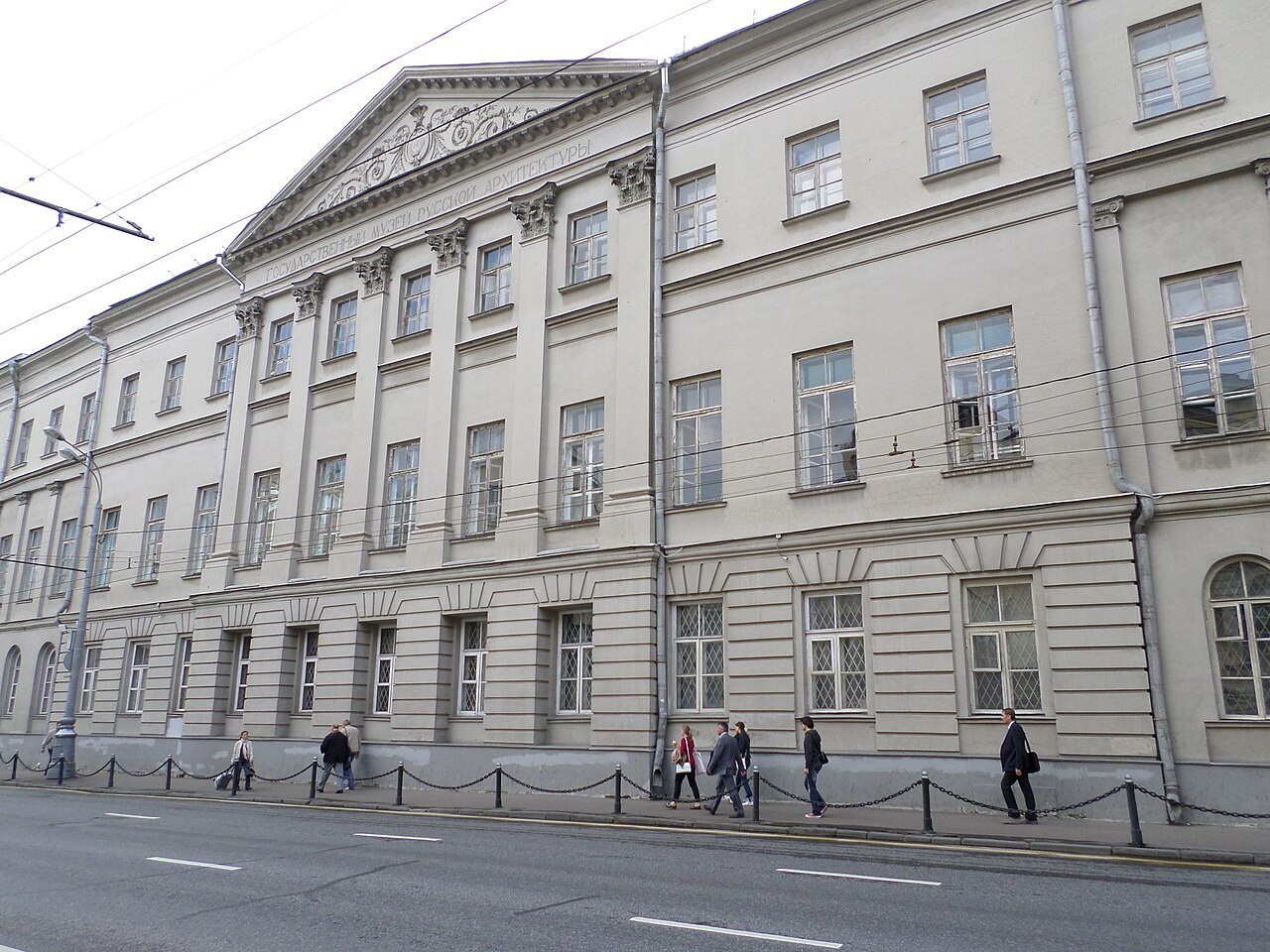
Shchusev State Museum of Architecture?Why this museumThe only museum of architecture in Russia and one of the few in the world. It holds fragments of demolished buildings — reliefs from the Cathedral of Christ the Saviour, details of the Sukharev Tower: things that exist nowhere else because the buildings do not.
9+With childrenArchitectural drawings say little to children; the models do.wheelchairStep-free accessThe museum — partly. The main enfilade is level, but the Ruin wing and the Apothecary Office are up steps.
Getting there — partly. Biblioteka imeni Lenina has no lift. Moscow metro stations almost never have lifts to the platform, except on the Big Circle line and the MCC. A wheelchair user is better served by the surface buses, which are low-floor across the centre.1.5 hours
The only museum of architecture in Russia and one of the few in the world. Founded in 1934 and named since 1945 after Alexey Shchusev, who created it. About a million items: drawings, models, photographs and fragments of demolished buildings.
The building. The Talyzin estate of the late 18th century; next to it the 17th-century chambers of the Apothecary Office.
Good to know. There is no permanent display in the usual sense: the museum lives by exhibitions, and several run at once.
What to see
The enfilade of the Talyzin house with its exhibitions; the Apothecary Office, 17th-century chambers where fragments of demolished Moscow buildings are shown; models of unbuilt projects, including material on the Palace of the Soviets.
Minimum route — 1.5 hours на самое важное
Walk the enfilade with the current exhibitions, then the Ruin wing and the Apothecary Office: fragments of demolished buildings, among them reliefs of the Cathedral of Christ the Saviour and details of the Sukharev Tower.
Сведения сверены 15 августа 2026 года, источник — открытые источники.
№ 43
The State Museum of Oriental Art?Why this museumWestern museums of the East were formed by colonial routes; this collection grew out of nationalised private collections and Soviet expeditions. Hence the Central Asian, Caucasian, Buryat and Chukchi sections that London and Paris lack: there the East begins with India and Egypt, here with what lay inside the country and next to it. That is the reason to come.
10+With childrenEastern art needs explaining and says little to younger children. From 10, better with a guide.wheelchairStep-free accessThe museum — partly. The Gilardi mansion: a ramp at the door, but steps between the enfilades. Ask an attendant to escort you.
Getting there — not checked. Arbatskaya and Pushkinskaya have no lifts. Surface transport along Nikitsky Boulevard. Moscow metro stations almost never have lifts to the platform, except on the Big Circle line and the MCC. A wheelchair user is better served by the surface buses, which are low-floor across the centre.2 hours
Founded on 30 October 1918. About 150,000 items: the Far and Near East, Central Asia, the Caucasus, Buryatia, Chukotka.
The building. The Lunin House, a model of Moscow Empire style, built by Domenico Gilardi in 1818–1823. The rooms were barely altered and still look little like galleries.
Good to know. The museum has a second site, Pavilion 13 at VDNKh, and a branch in Maykop. Several halls are given to the painting of Nicholas and Svyatoslav Roerich; in our view that is not what makes the trip worth it.
What to see
Central Asian and Caucasian carpets and metalwork transferred from the State Museum Fund; Iranian Qajar painting and tilework; Chinese bronze and porcelain, Japanese prints; a Korean section rare for Russia; Buddhist sculpture of Buryatia and Mongolia.
Minimum route — 2 hours на самое важное
Two hours. 50 minutes — the Central Asian and Caucasian halls: carpets, metalwork, ceramics — the strongest part of the collection and the part London and Paris do not have. 40 minutes — Iran and the Near East: Qajar painting, tilework, miniatures. 30 minutes — China, Japan and Korea: bronze, porcelain, prints. Look at Gilardi’s Empire interiors as you go: the rooms were barely altered for the museum.
Iranian painting of the 18th and 19th century, recently acquired by the museum. A small show in the main building on Nikitsky Boulevard.
№ 55
Tretyakov Gallery. Kadashevskaya Embankment wing?Why this museumNot yet a collection but an instrument: the first exhibition building in Moscow built to 21st-century museum standards — climate, light, spans. Its value is that things can now be brought here that could not be brought before.
7+With childrenA new building with wide halls and an atrium: a child is not hemmed in. What to see depends on the exhibition.wheelchairStep-free accessThe museum — step-free. Built in 2024 and fully accessible: lifts, ramps, accessible toilets, wheelchairs lent.
Getting there — step-free. No lift at Tretyakovskaya, but the approach from the embankment is level and there is a drop-off point. Moscow metro stations almost never have lifts to the platform, except on the Big Circle line and the MCC. A wheelchair user is better served by the surface buses, which are low-floor across the centre.1.5–2 hours
The new Tretyakov Gallery building, opened in 2024: over 35,000 sq m of exhibition space, conservation studios for painting, graphics and sculpture, and a research photo archive. The gallery’s major premieres have moved here.
The building. Built in 2024 to a design by SPEECH; more than ten years in construction.
Good to know. The atrium, shop and box offices are open without a ticket — you may come simply to see the building.
What to see
There is no permanent collection — this is an exhibition wing. See the atrium, open without a ticket, and the façades: they carry reproductions of 34 works by Russian artists.
Minimum route — 1.5–2 hours на самое важное
The exhibition you came for, then the atrium and the view over Lavrushinsky from the upper level. Ten minutes on foot to the historic building.
Over 140 works from twenty collections: The Pool, The Emerald Necklace and studies almost never shown. Russian Symbolism is one of the summits at which art lifts a person beyond himself; a retrospective this full comes once in a generation.
Закрыты и не работают
Из каталога мы их не убираем: музей может открыться, а история собрания — тоже знание.
Volkhonka 10 · The permanent display has been closed since 2015: the building is part of the Pushkin Museum’s “museum town” works. Individual exhibitions of the department are shown in other buildings. Checked 14 August 2026.
Novaya Ploshchad 3/4 · The historic building has been under reconstruction since 2013; opening is promised for 2026. The museum park around it is open. Part of the collection is shown at the Technopolis Moscow, Volgogradsky Prospekt 42. Checked 15 August 2026.
1st Samotyochny Lane 9, bldg 1 · The museum has been closed to visitors since 2024 and no opening date has been announced. Checked 15 August 2026.
Наша шкала музейной ценности
Оценку ставим мы сами и отвечаем за неё: она о ценности собрания, а не о размере здания, посещаемости или известности имени.
мирового значения
Собрание, ради которого стоит приехать в город.
выдающийся
Сильное собрание; стоит отдельной поездки через город.
значительный
Есть вещи, которые стоит увидеть.
для увлечённых
Интересно тому, кому интересна сама тема.
узкий интерес
Ценно очень узкому кругу, без общего признания.
Сведения сверены 15 августа 2026 года — по сайтам музеев и открытым источникам. У каждой карточки своя дата сверки и то, чем сверяли. Цену, которую подтвердить не удалось, мы так и пишем, а не оставляем старую.
Сколько времени — это на самое важное, по нашему минимальному маршруту, без кафе, магазина и очереди в гардероб. Обойти музей целиком почти всегда дольше.
Снимки — с Викисклада, под свободными лицензиями; автор и лицензия указаны под каждым.
18 мая — Международный день музеев (с 1977 года), в ночь с 17 на 18 мая — «Ночь музеев». В эти дни музеи работают иначе и часто бесплатно.
Нашли неточность?
Мы отвечаем за каждую цифру и дату на этих страницах. Если музей изменил часы или цену, если ссылка умерла или вы считаете, что в списке не хватает музея, — напишите. Поправим и поставим новую дату сверки.





.jpg)
.JPG)
