Not every museum in the city — only those worth the trip. Every entry carries our own value rating, what to see, a minimum route, when to come and what it costs.
Over 140 works from twenty collections: The Pool, The Emerald Necklace and studies almost never shown. Russian Symbolism is one of the summits at which art lifts a person beyond himself; a retrospective this full comes once in a generation.
Over seven hundred objects: sculpture and painting of Russian Buddhism, almost none of it shown before. More than a hundred sculptures were conserved for the opening.
Выставка, подготовленная парижским музеем на набережной Бранли, рассказывает о культуре народов, населяющих территории шести стран: южной части Камеруна, Экваториальной Гвинеи, Габона, Республики Конго, Демократической Республики Конго, а также части Анголы
Музей представляет выставку, посвященную ювелирному искусству греков и варваров, некогда обитавших на берегах Черного моря. Предметный ряд выставки включает около 200 золотых украшений VI в. до н.э. – V в. н.э. и более 100 золотых монет греческой и римской чеканки из собрания музея.
Выставка, на которой представлены фотографии конца XIX – начала XX века, посвящена путешествиям П.М. Третьякова. Поездки представляли серьезный интерес для Павла Михайловича: он посетил 250 городов в 20 странах Европы.
ГМИИ им. А.С. Пушкина открывает двери современным течениям в искусстве. Параллельно с выставкой «Вечные темы искусства», приуроченной к XXXV Международному музыкальному фестивалю «Декабрьские вечера Святослава Рихтера» зрители увидят уникальную выставку видеоработ современных художников из разных ст
На выставке представлены уникальные рукописные документы, мемориальные предметы и редкие книжные памятники. На небольшом пространстве собраны автографы А.С. Грибоедова, М.Ю. Лермонтова, Н.В. Гоголя, Н.А. Некрасова, Ф.М. Достоевского, Л.Н. Толстого, И.А. Бунина, А.П. Чехова, А. Белого, М. Горького и
В Государственном литературном музее открывается выставка, приуроченная к 125-летию Осипа Мандельштама. Портреты и фотографии Мандельштама и его окружения, автографы, документы, прижизненные издания, книги с инскриптами, рукописи писателя – проект, беспрецедентный по количеству экспонатов и числу му
В этом году музейное собрание «Дома Гоголя» пополнилось предметами музейного значения в количестве свыше пятисот единиц. Коллекцию подарков в фонды «Дома Гоголя» открыла необычная бронзовая композиция выдающегося российского скульптора Григория Потоцкого «Писатель Николай Гоголь».
Впервые в Третьяковской галерее проходит выставка Таира Теймуровича Салахова (род. 1928) – классика живописи, мастера, продолжающего работать и сегодня. В его творчестве проявились главные темы живописи 1950–2000-х годов. Он вошел в историю искусства как ключевая фигура «сурового стиля» и остается с
Пушкинская речь запомнилась современникам и вошла в историю русской культуры не только масштабностью своего содержания, но равно и тем беспримерным откликом, который она вызвала в зале. Такого духовного единства и подъёма русская интеллигенция ни до, ни после никогда не испытывала.
Третьяковская галерея представляет искусство известного ленинградского художника-графика Валентина Ивановича Курдова (1905–1989). В собрании музея хранятся станковые графические серии, плакаты и рисунки военного времени, книжная графика и книги с иллюстрациями автора.
Дрезденская галерея – это уникальное собрание живописи старых мастеров. Редчайшее собрание картин сформировалось в XVIII веке благодаря усилиям нескльких поколений саксонских монархов, а в середине XIX века коллекция была превращена в музей и для шедевров возвели специальное здание.
Проект познакомит российского зрителя с историей китайского кинематографа – от эпохи, предшествующей его появлению, до блокбастеров XXI века. В экспозиции представлены многочисленные киноафиши, макеты, костюмы, реквизит и др.
Русская усадьба была основой дворянской жизни, экономики и культуры Российской империи. На конкурс было представлено более 500 работ, выполненных в 1987–2014 гг., запечатлевших многие усадьбы центральной России. На выставке представлены лучшие работы победителей конкурса «Образ русской усадьбы».
Предметы холодного оружия из собрания Музея Азии и Тихого океана (Варшава) представляют собой произведения традиционного декоративно-прикладного искусства Индонезии.
Насыщенная уникальными документальными и художественными материалами, произведениями искусства и предметами эпохи XVII – XX веков, выставка увлекательно рассказывает о взаимоотношениях двух старинных российских родов – Пушкиных и Романовых.
В одном из залов постоянной экспозиции Третьяковской галереи появилась редкая возможность разместить все хранящиеся в фондах живописные и часть графических работ В.Васнецова этого цикла, поступившие в Галерею почти 120 лет назад.
Выставка посвящена натюрморту – наиболее концептуальному жанру изобразительного искусства. Внешне бессюжетный, этот жанр является одним из самых философских, отражая все многообразие связей человека с миром вещей.
Экспонатами выставки стали различные документы, отражающие как богоборческую политику власти, так и реакцию на нее Церкви. Смысловым центром экспозиции являются разделы, посвященные эпохе самых масштабных и кровавых гонений: с октябрьского переворота по 1937 год.
Выставка строится на противопоставлении русской мечты о «земном потерянном рае», воплощённой в главе «Сон Обломова», и идеи прогресса и цивилизации. Основа выставки - материалы Гончаровской коллекции Литературного музея
В экспозиции представлены археологические находки из Бородинского и Галичского кладов, которые позволяют составить представление об основных достижениях бронзового века.
В центре экспозиции – медали и гравюры, которые были созданы как отражение грандиозных исторических событий конца XVIII – начала XIX веков, а также экспонаты, связанные с участниками военных событий тех лет, и памятные знаки, выполненные последующими поколениями.
Впервые в одном выставочном пространстве будет представлено 100 произведений западноевропейских мастеров VI-XVIII веков, выполненных в разных жанрах и стилях, из девяти музеев Украины.
Выставку малоизвестного графического наследия Марка Шагала (1887–1985). Проект включен в программу Года французского языка и литературы в России, обозначив тем самым одну из основных особенностей творчества Марка Шагала – его интернациональность.
Выставка приурочена к 130-летнию ИППО, которое ведет плодотворную деятельность, направленную на укрепление сотрудничества со странами библейского региона.
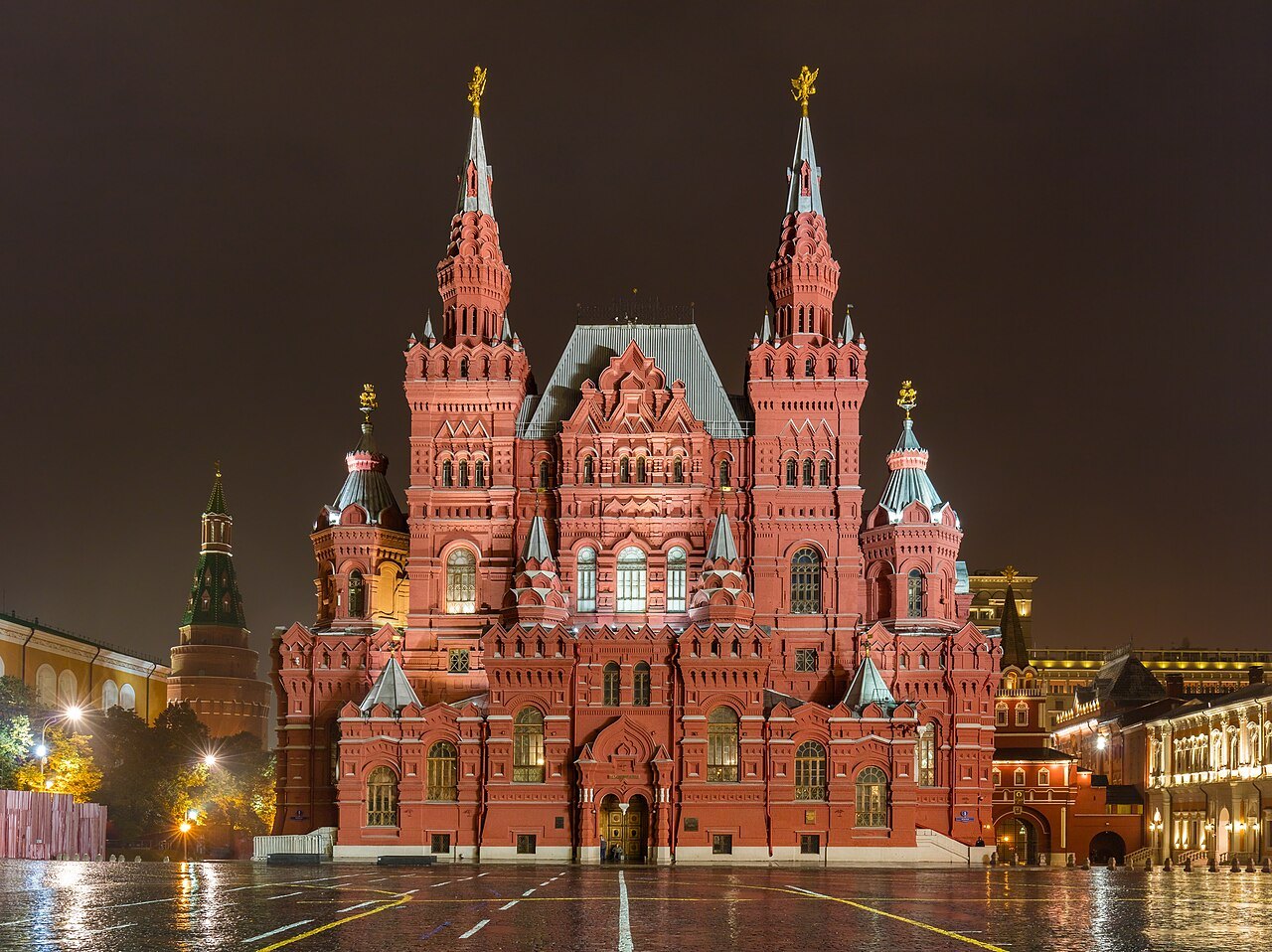
The State Historical Museum?Why this museumA collection of material sources on Russian history unmatched for completeness: archaeology, numismatics, arms and manuscripts in one sequence, five million objects. And a rarity of another kind — Sherwood’s fully preserved Russian Revival interior, a monument in itself.
9+With childrenBelow nine, forty halls are exhausting. Older children do well if you come for one theme — arms, hoards, costume.wheelchairStep-free accessThe museum — partly. There is a ramp and a lift, but part of the first floor is reached by the old stairs. Telephone ahead: staff will take you round.
Getting there — partly. Neither Okhotny Ryad nor Teatralnaya has a lift. By wheelchair, surface transport to Red Square or a taxi. Moscow metro stations almost never have lifts to the platform, except on the Big Circle line and the MCC. A wheelchair user is better served by the surface buses, which are low-floor across the centre.3 hours
Russia’s main national museum: about 5 million objects and 15 million sheets of documents, from the Stone Age to the 20th century across forty halls.
The building. Built 1875–1883 by Vladimir Sherwood and the engineer Anatoly Semyonov in the Russian Revival style.
Good to know. St Basil’s Cathedral, the Romanov Chambers and the Museum of the Patriotic War of 1812 belong to the museum; their tickets are separate.
What to see
A dugout boat some 3,500 years old; the Mstislav Gospel of the early 12th century; the helmet of Prince Yaroslav Vsevolodovich; a Blaeu globe; personal belongings of Peter the Great. Look up: the halls themselves are painted after Old Russian models and count as an exhibit.
Minimum route — 3 hours на самое важное
Go round from hall 1: the dugout boat, then the Mstislav Gospel and the helmet of Yaroslav Vsevolodovich, on to the Blaeu globe and Peter the Great.
Money in The Master and Margarita: ancient Judaea and Moscow of the 1920s–30s, set object against object. For Bulgakov’s 135th anniversary.
№ 47
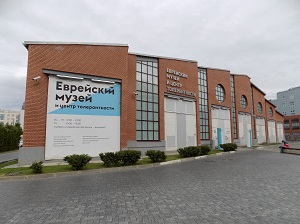
Jewish Museum and Tolerance Center?Why this museumCome for two things at once: the Bakhmetevsky garage by Melnikov and Shukhov, a building of world significance, and the history of Russian Jewry told from inside as nowhere else. The holdings of originals are modest, and that is worth knowing beforehand.
6+With childrenOne of the few museums in Moscow that genuinely holds children: screens, sound, film, interactive tables. From 6.wheelchairStep-free accessThe museum — step-free. Fully accessible: level floors throughout, lifts, accessible toilets, wheelchairs at the door. One of the best in Moscow for this.
Getting there — step-free. Maryina Roshcha has no lift and Dostoyevskaya is a kilometre away. There is car parking and low-floor buses. Moscow metro stations almost never have lifts to the platform, except on the Big Circle line and the MCC. A wheelchair user is better served by the surface buses, which are low-floor across the centre.2.5 hours
Reference
Opened in 2012 in the Bakhmetevsky bus garage. The permanent display tells the history of the Jewish people and of Russian Jewry as a sequence of interactive spaces.
The building. The Bakhmetevsky garage, 1926–1927, architect Konstantin Melnikov, structures by Vladimir Shukhov.
What to see
The building itself — the Bakhmetevsky garage of 1926–1927, one of Konstantin Melnikov’s principal works with steel structures by Vladimir Shukhov; the Café on Basseynaya, a reconstruction of shtetl life.
Minimum route — 2.5 hours на самое важное
The permanent display runs as one route, with the Café on Basseynaya halfway. Look separately at the garage itself.
Сведения сверены 15 августа 2026 года, источник — сайт музея.
№ 56
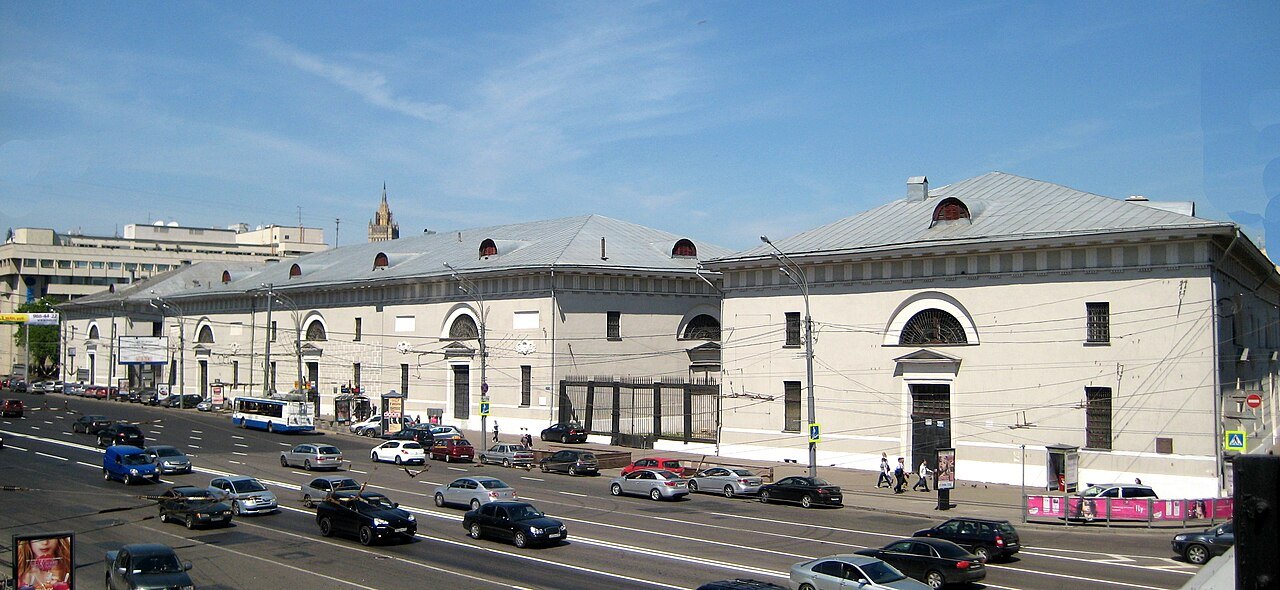
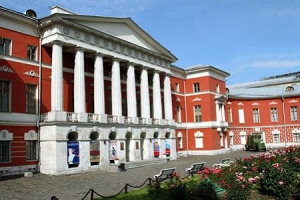
Museum of Moscow?Why this museumA city museum — an ordinary genre in Europe — but the material is unique in scale: a million objects about one city. The value is also the Provision Warehouses by Stasov, a model Empire building rarely accessible from inside.
7+With childrenThe archaeology of Moscow and city life make sense to children: potsherds, bones, models. From 7, with children’s programmes.wheelchairStep-free accessThe museum — step-free. The Provision Warehouses were converted: ramps, lifts, a level courtyard.
Getting there — step-free. Park Kultury has no lift. Surface transport along Zubovsky Boulevard; the approach is level. Moscow metro stations almost never have lifts to the platform, except on the Big Circle line and the MCC. A wheelchair user is better served by the surface buses, which are low-floor across the centre.2 hours
The head museum of the association that also runs the Museum of Archaeology and the Old English Court. Founded in 1896 as the Museum of Municipal Economy. About a million items on the city from the Stone Age onwards; since 2009 the museum occupies the Provision Warehouses.
The building. The Provision Warehouses, 1829–1835, after Vasily Stasov’s model design; a military store that became a museum in 2009.
Good to know. Tickets online only. Children under 13 must be accompanied.
What to see
The permanent display History of Moscow: the archaeology of Moscow soil, town life, plans and views of the city by century. And the Provision Warehouses themselves, an Empire monument after Vasily Stasov.
Minimum route — 2 hours на самое важное
Walk History of Moscow through — that is the core; then one temporary show in the second block. Linger in the yard: the parade ground between the warehouses is a rare piece of city.
Сведения сверены 15 августа 2026 года, источник — открытые источники.
№ 18
The Old English Court?Why this museumThe oldest surviving secular building in Moscow. The value is in the vaults themselves: almost no 16th-century interiors are left in the city, and these were recovered by Baranovsky, the restorer who saved half of it.
8+With children16th-century chambers and the story of the English merchants — from 8.wheelchairStep-free accessThe museum — no. 16th-century chambers: steep steps and vaulted cellars, no platform lift.
Getting there — partly. Kitay-Gorod has no lift; the paths in Zaryadye park are level. Moscow metro stations almost never have lifts to the platform, except on the Big Circle line and the MCC. A wheelchair user is better served by the surface buses, which are low-floor across the centre.45 minutes
What to see
The Treasury Chamber with its 16th–17th-century interior and the original vaults; the display on Russian–English trade and finds from the Zaryadye digs.
Minimum route — 45 minutes на самое важное
The Treasury Chamber and the vaults. Half an hour, then a walk through Zaryadye.
Getting in
The building
16th-century chambers. Their present look is the result of Pyotr Baranovsky’s restoration of 1968–1972; before that the building was buried in later additions.
Chambers given by Ivan the Terrible to the English merchants of the Muscovy Company in 1556 — one of the oldest secular buildings in Moscow. A museum since 1994, part of the Museum of Moscow. Formerly called the English Podvorye.
The building. 16th-century chambers. Their present look is the result of Pyotr Baranovsky’s restoration of 1968–1972; before that the building was buried in later additions.
Сведения сверены 15 августа 2026 года, источник — открытые источники.
№ 36
Exhibition Hall of the Federal Archives?Why this museumNo collection of its own; the value is that originals otherwise available to nobody but researchers come here for two or three months. Go for a particular exhibition and only for that.
adultsWith childrenDocumentary exhibitions are not for children.wheelchairStep-free accessThe museum — not checked. Access not checked; entry is with a passport through the archive campus.
Getting there — partly. Frunzenskaya has no lift. Moscow metro stations almost never have lifts to the platform, except on the Big Circle line and the MCC. A wheelchair user is better served by the surface buses, which are low-floor across the centre.1 hour
Reference
The main exhibition venue of the Russian federal archives, working since March 2000. There is no permanent display, only documentary exhibitions.
What to see
Original documents from the State Archive of the Russian Federation, RGADA, RGVIA and other federal archives: things that normally stay in the stacks.
Minimum route — 1 hour на самое важное
One documentary exhibition: originals from the federal archives.
Сведения сверены 15 августа 2026 года, источник — открытые источники.
№ 15
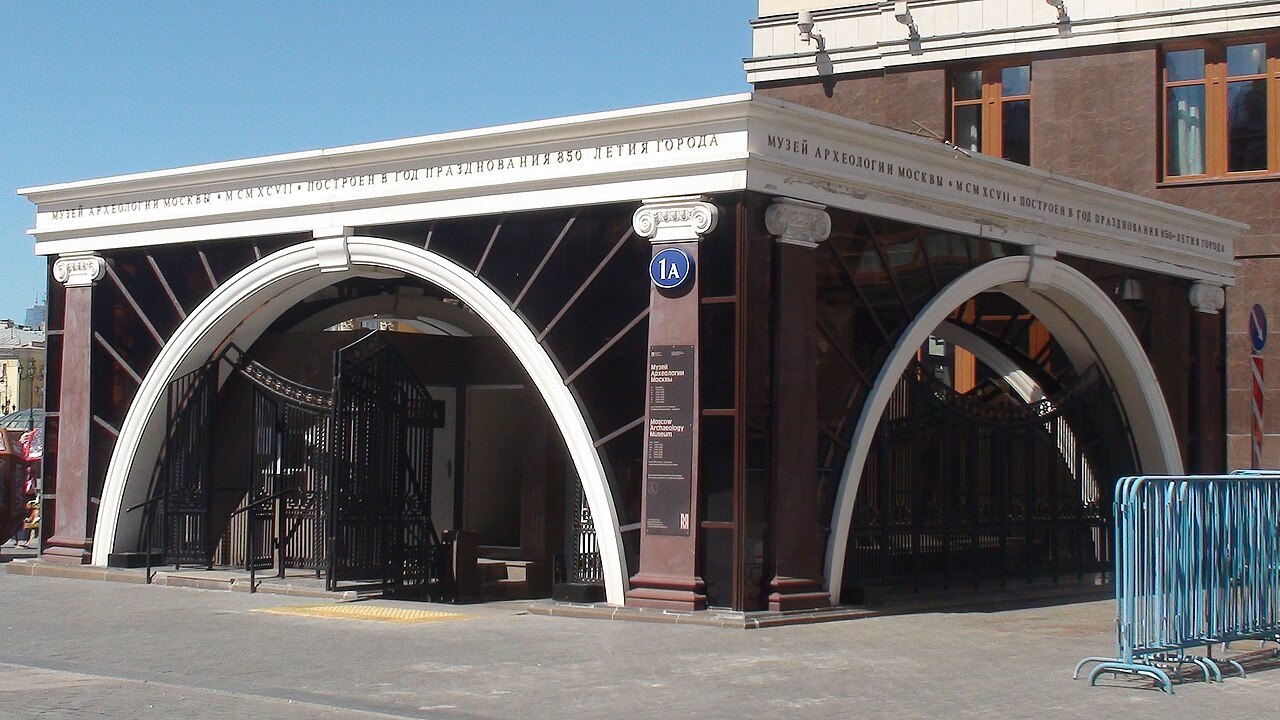
Museum of Moscow Archaeology?Why this museumA museum built around what cannot be moved: the 16th-century bridge piers stayed where they were and the building went up over them. That method of display is rare, and it is the reason to go down.
7+With childrenAn underground museum on the site of a dig — children like the descent itself. From 7.wheelchairStep-free accessThe museum — partly. A descent of seven metres: there is a lift, but the aisles between cases are narrow.
Getting there — partly. None of the stations by Manezhnaya Square has a lift. Moscow metro stations almost never have lifts to the platform, except on the Big Circle line and the MCC. A wheelchair user is better served by the surface buses, which are low-floor across the centre.1 hour
A branch of the Museum of Moscow. Built in 1997 on the site of the 1993–1996 excavations, seven metres below ground.
The building. An underground pavilion of 1997, built during the works on Manezhnaya Square.
What to see
The white-stone piers of the Voskresensky Bridge of the 16th to 18th century — the museum was built around them; coin hoards found in the city centre; the everyday things of medieval Moscow.
Minimum route — 1 hour на самое важное
Go seven metres down to the bridge piers — that is the museum. Then the cases of finds and the coin hoards.
Сведения сверены 15 августа 2026 года, источник — сайт музея.
№ 28
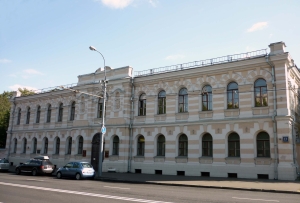
State Central Museum of Contemporary History of Russia?Why this museumThe collection is large, but the display is built ideologically and is unreliable as a source of knowledge — we say so plainly. The value is the building: this is the Moscow English Club, the one from the novels, and some objects such as the propaganda porcelain.
9+With children20th-century history is dull without preparation; for older children on a theme, yes.wheelchairStep-free accessThe museum — partly. An 18th-century mansion: a platform lift, some halls up steps.
Getting there — partly. Pushkinskaya has no lift. Moscow metro stations almost never have lifts to the platform, except on the Big Circle line and the MCC. A wheelchair user is better served by the surface buses, which are low-floor across the centre.2 hours
Reference
Russian history from the second half of the 19th century to today: about 1,300,000 items. Founded in 1917 as the Museum of the Revolution and opened to the public in 1924.
The building. The Razumovsky estate of the 1780s, rebuilt after the fire of 1812 (A. Menelaws, D. Gilardi). From 1831 to 1917 it housed the Moscow English Club.
Good to know. Free for under-16s, disabled visitors of groups I and II, Heroes of the Soviet Union and of Russia, ICOM members.
What to see
The building of the Moscow English Club — the club of Eugene Onegin and War and Peace, with the lions on its gate; Soviet propaganda porcelain; the collection of gifts to Stalin.
Minimum route — 2 hours на самое важное
The halls of the turn of the 20th century, then the propaganda porcelain and the gifts to Stalin. Look at the house itself: it is the English Club.
Volkhonka 10 · The permanent display has been closed since 2015: the building is part of the Pushkin Museum’s “museum town” works. Individual exhibitions of the department are shown in other buildings. Checked 14 August 2026.
Novaya Ploshchad 3/4 · The historic building has been under reconstruction since 2013; opening is promised for 2026. The museum park around it is open. Part of the collection is shown at the Technopolis Moscow, Volgogradsky Prospekt 42. Checked 15 August 2026.
1st Samotyochny Lane 9, bldg 1 · The museum has been closed to visitors since 2024 and no opening date has been announced. Checked 15 August 2026.
Наша шкала музейной ценности
Оценку ставим мы сами и отвечаем за неё: она о ценности собрания, а не о размере здания, посещаемости или известности имени.
мирового значения
Собрание, ради которого стоит приехать в город.
выдающийся
Сильное собрание; стоит отдельной поездки через город.
значительный
Есть вещи, которые стоит увидеть.
для увлечённых
Интересно тому, кому интересна сама тема.
узкий интерес
Ценно очень узкому кругу, без общего признания.
Сведения сверены 15 августа 2026 года — по сайтам музеев и открытым источникам. У каждой карточки своя дата сверки и то, чем сверяли. Цену, которую подтвердить не удалось, мы так и пишем, а не оставляем старую.
Сколько времени — это на самое важное, по нашему минимальному маршруту, без кафе, магазина и очереди в гардероб. Обойти музей целиком почти всегда дольше.
Снимки — с Викисклада, под свободными лицензиями; автор и лицензия указаны под каждым.
18 мая — Международный день музеев (с 1977 года), в ночь с 17 на 18 мая — «Ночь музеев». В эти дни музеи работают иначе и часто бесплатно.
Нашли неточность?
Мы отвечаем за каждую цифру и дату на этих страницах. Если музей изменил часы или цену, если ссылка умерла или вы считаете, что в списке не хватает музея, — напишите. Поправим и поставим новую дату сверки.