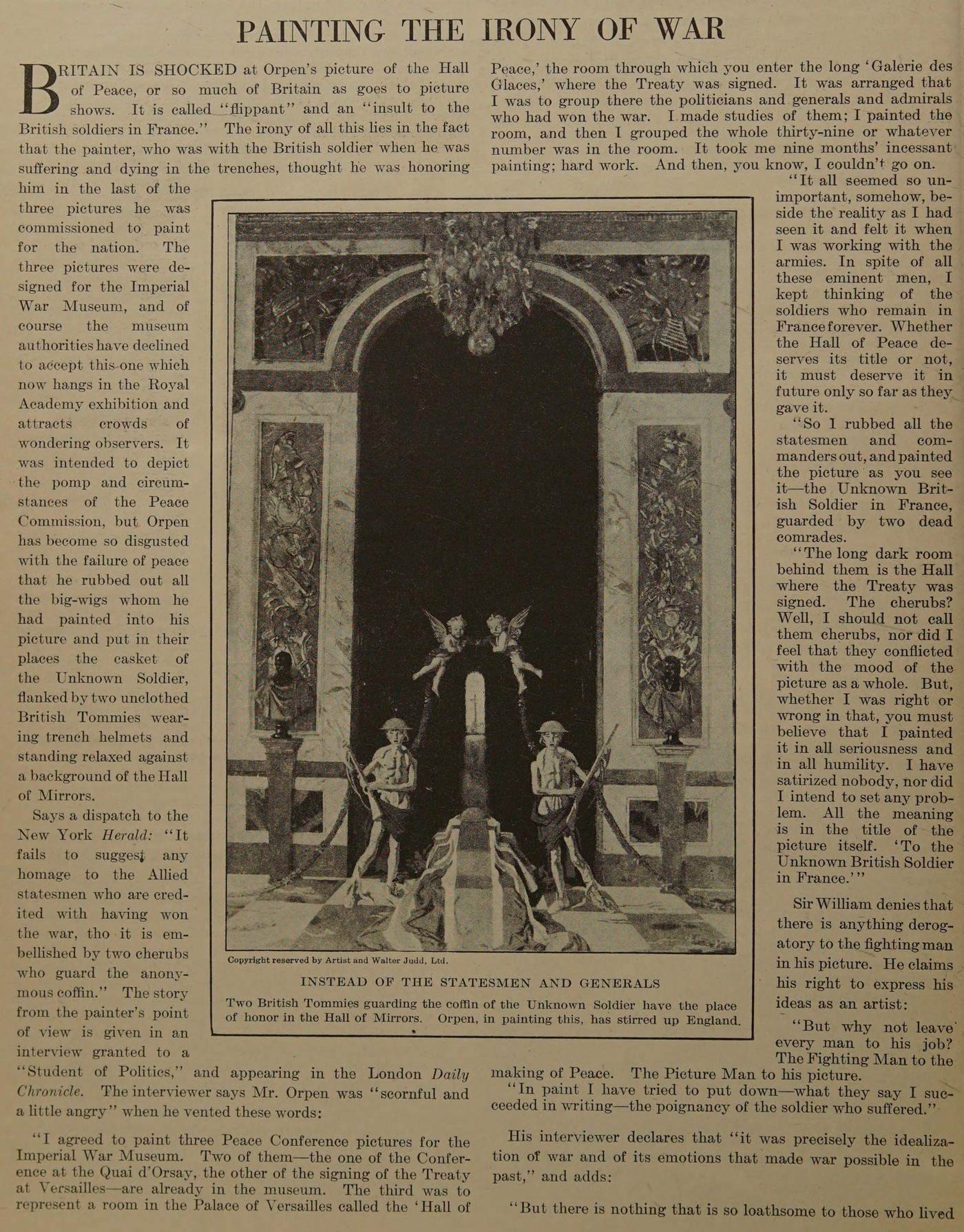
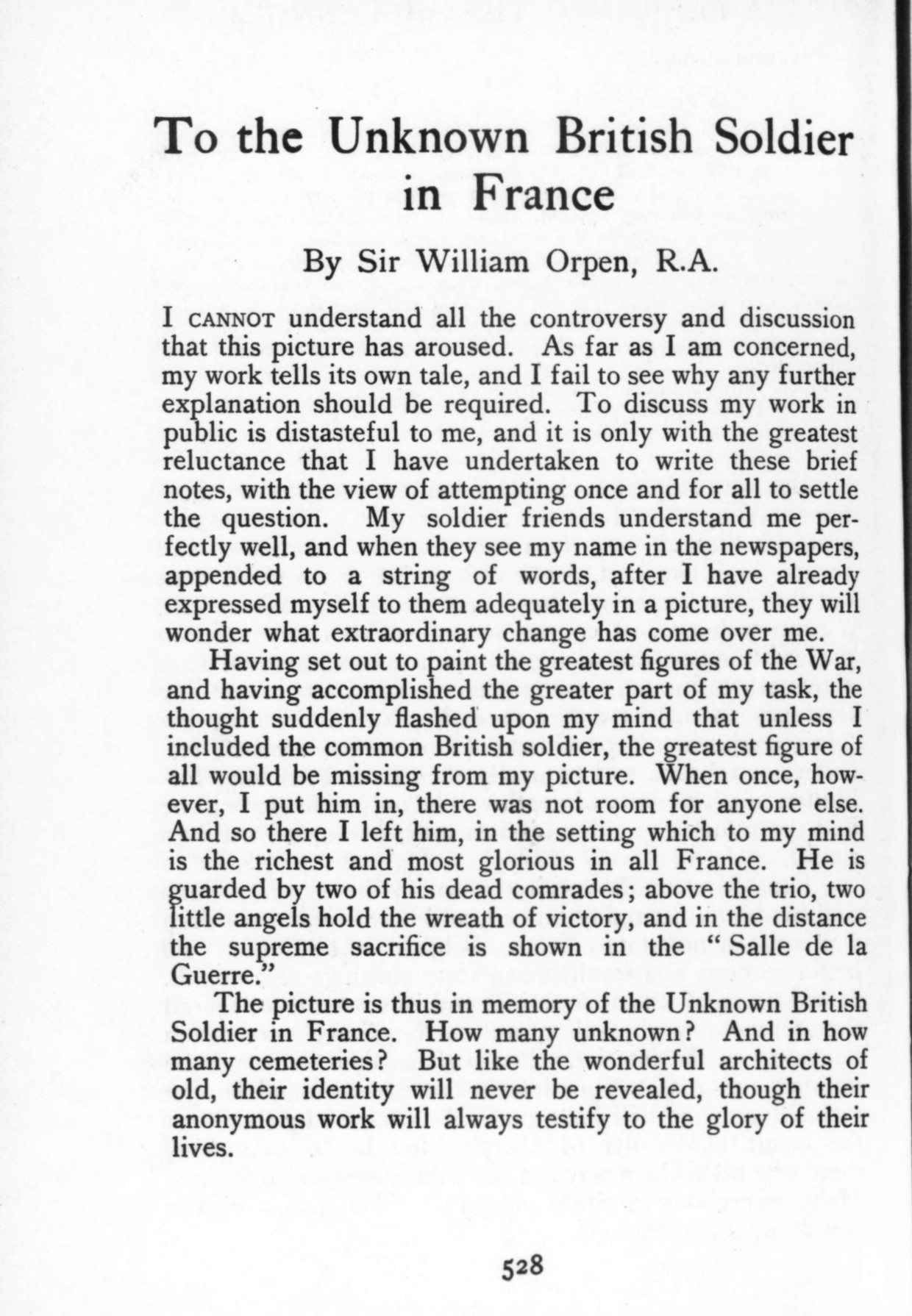
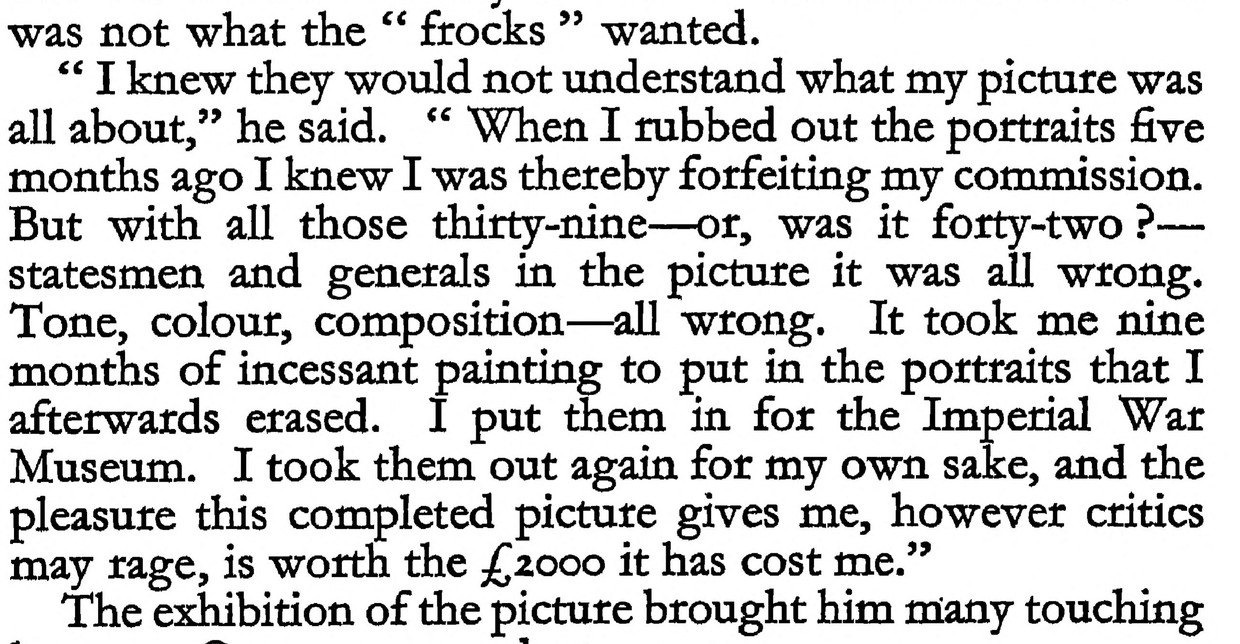
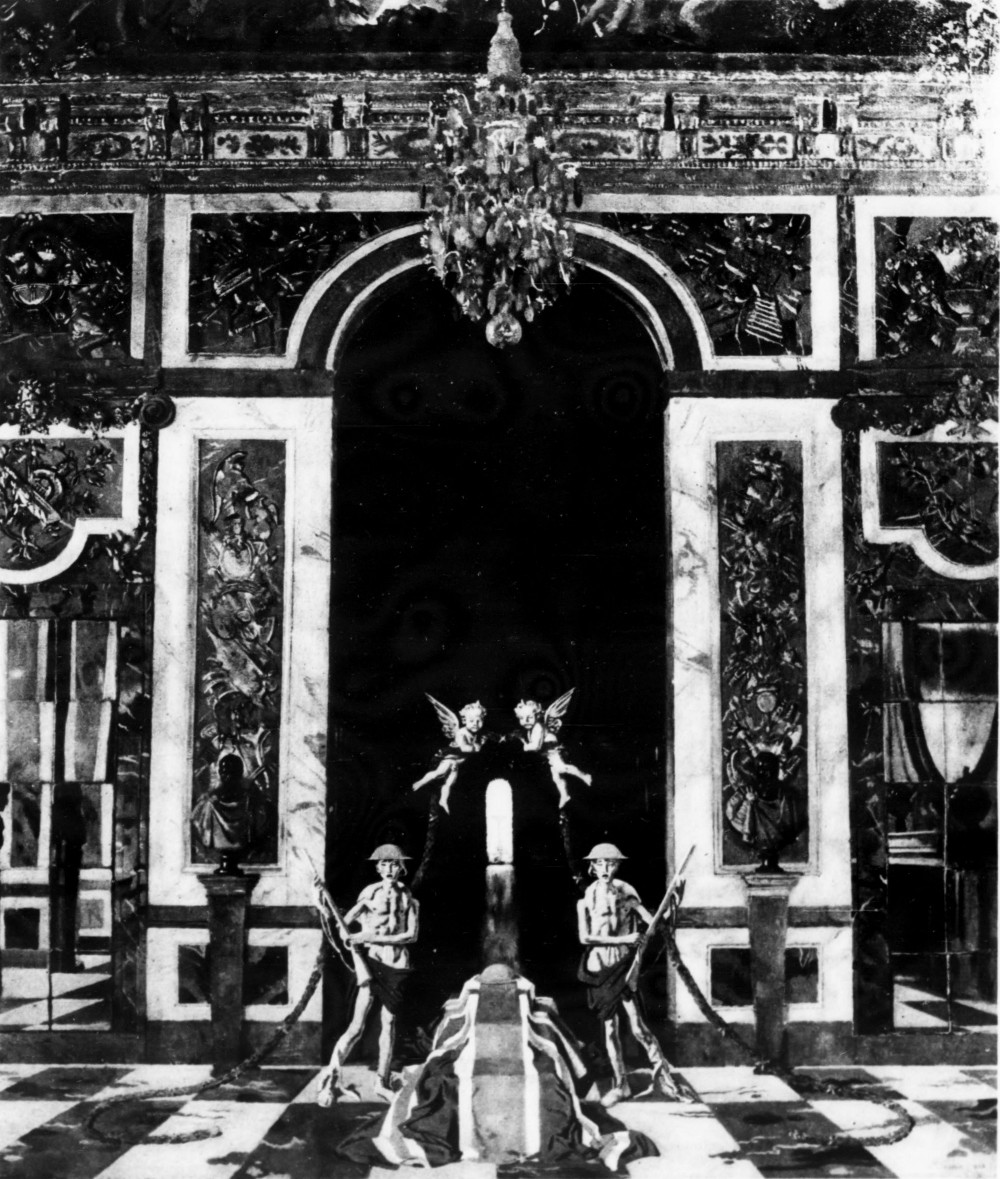
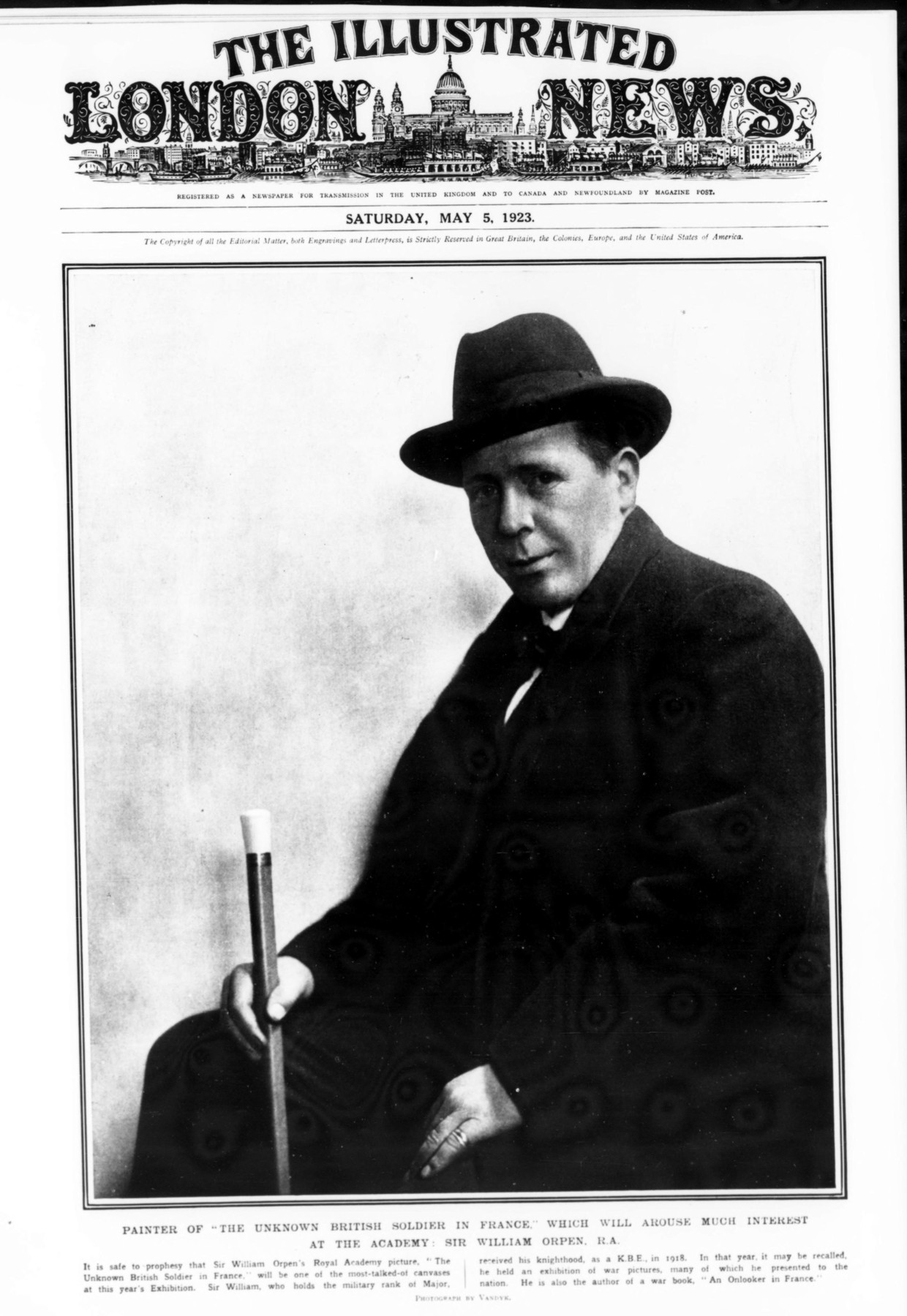
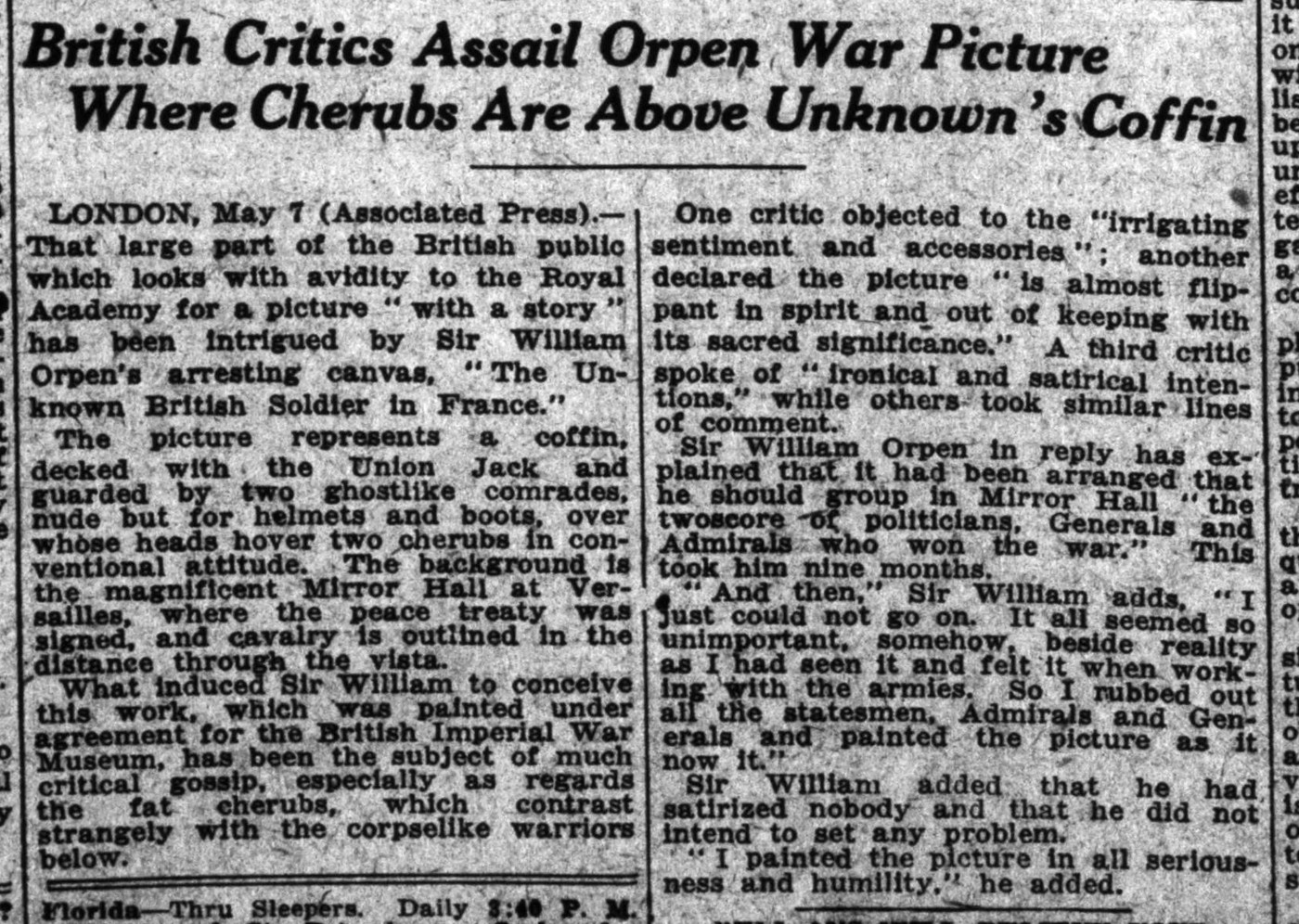
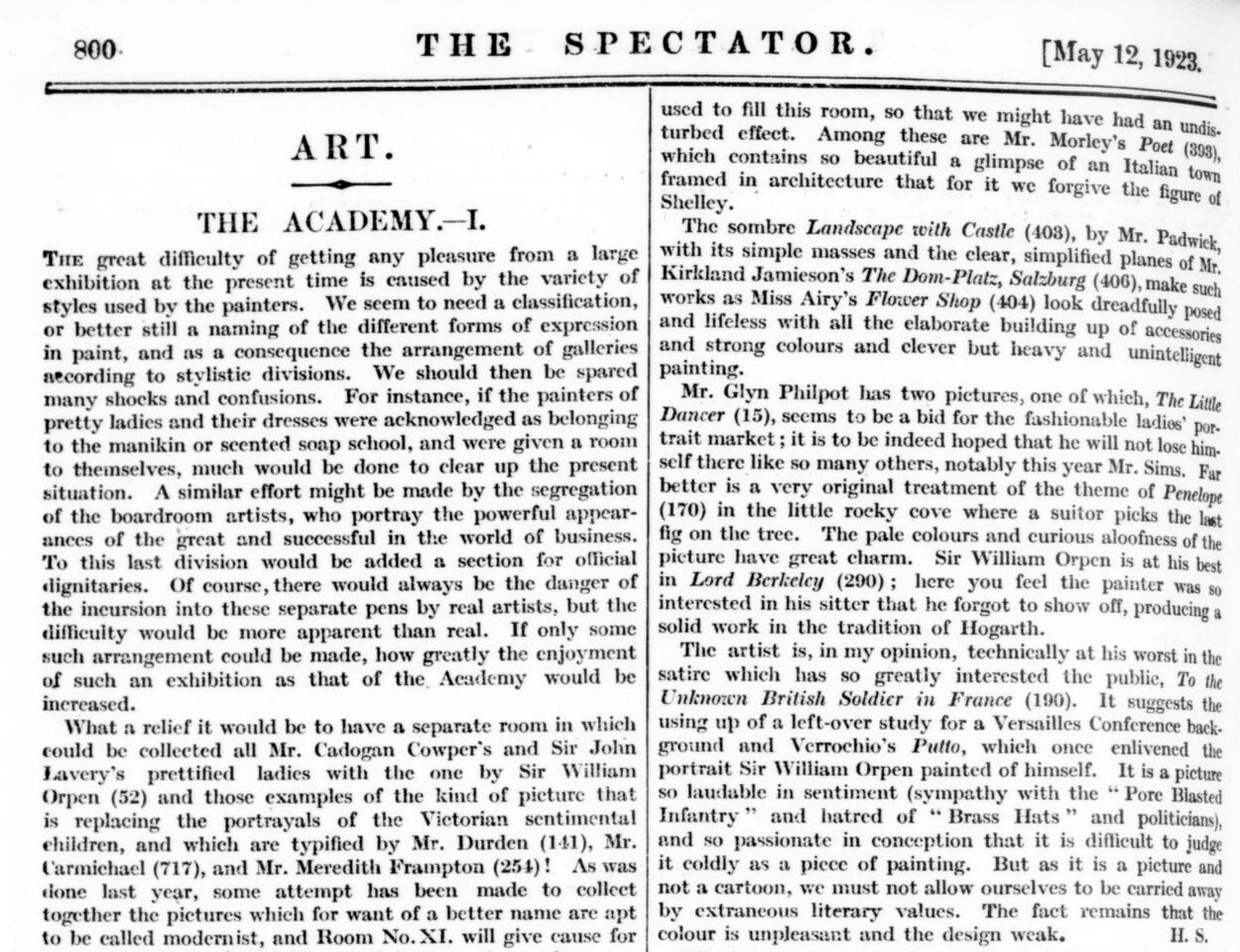
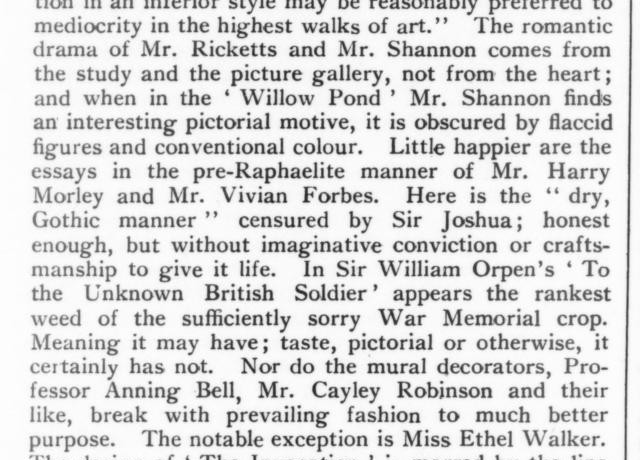
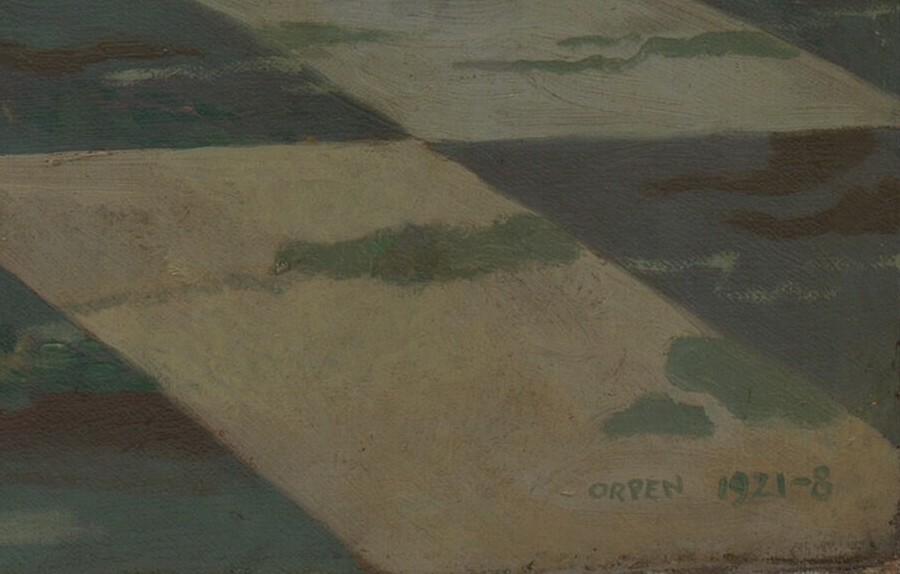
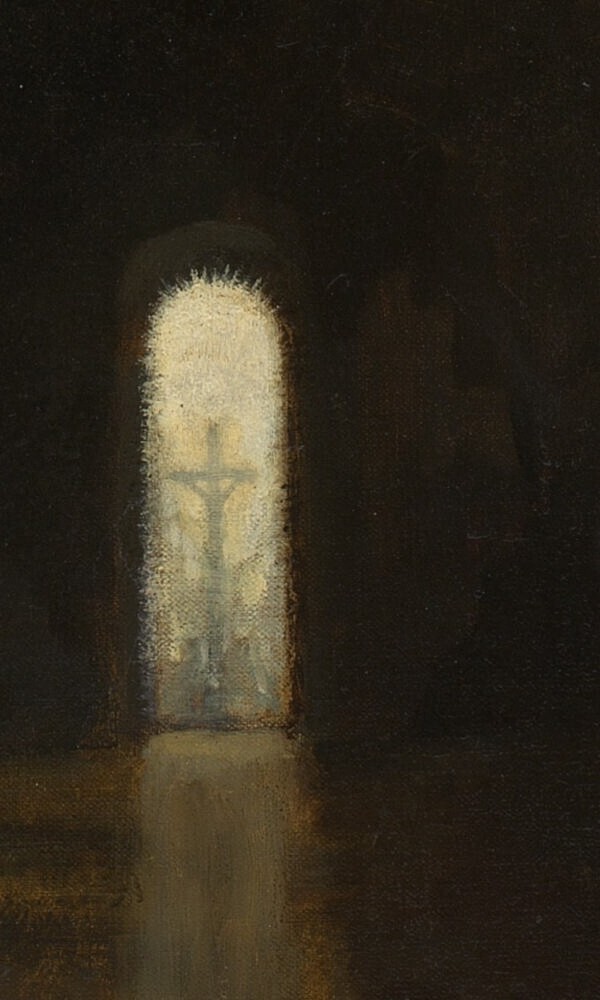
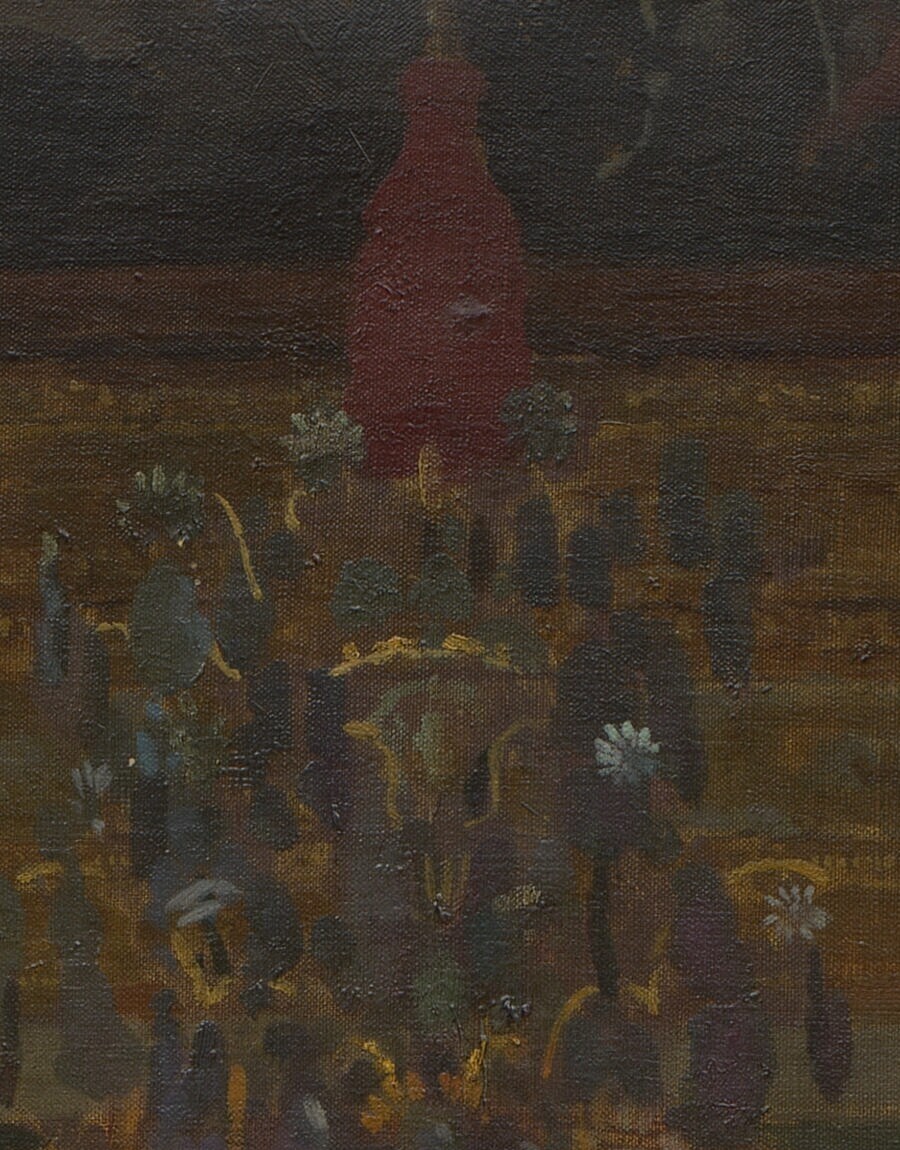
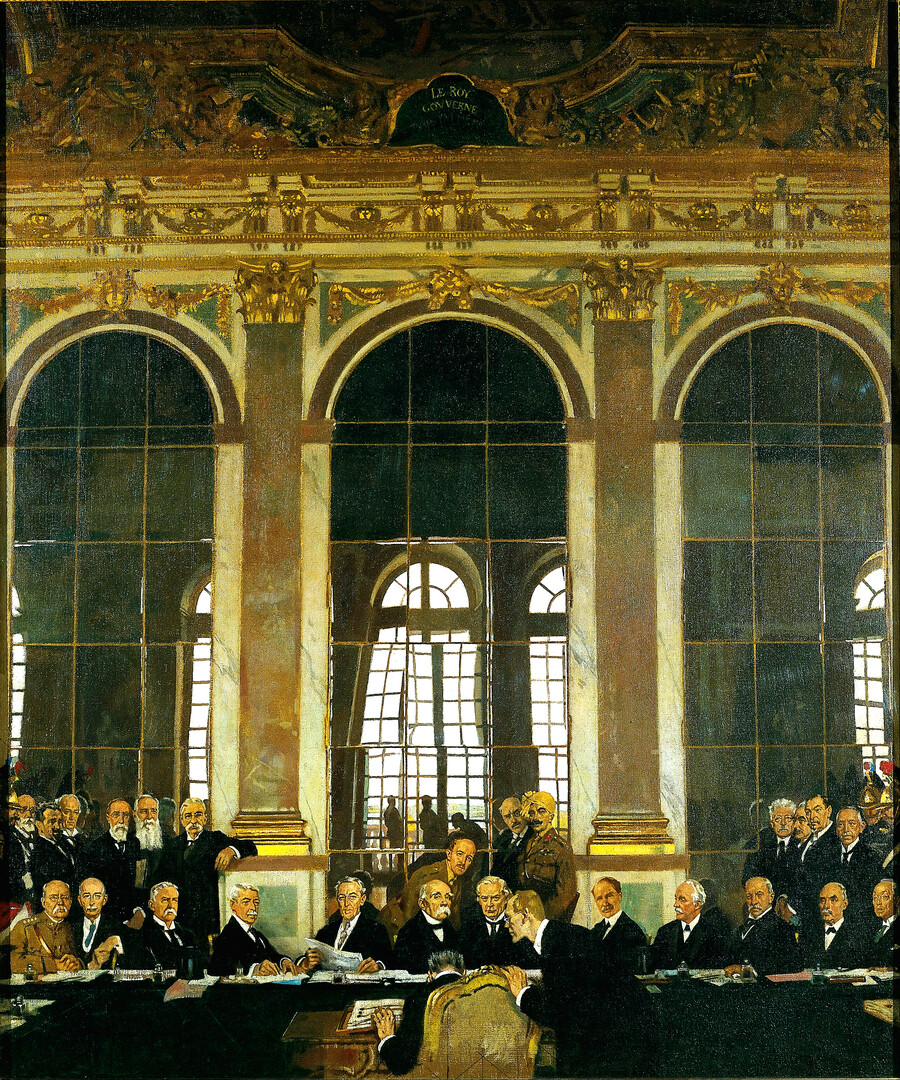
“I agreed to paint three Peace Conference pictures for the Imperial War Museum. Two of them—the one of the Conference at the Quai d’Orsay, the other of the signing of the Treaty at Versailles—are already in the museum. The third was to represent a room in the Palace of Versailles called the ‘Hall of Peace,’ the room through which you enter the long ‘Galerie des Glaces,’ where the Treaty was signed. It was arranged that I was to group there the politicians and generals and admirals who had won the war. I made studies of them; I painted the room, and then I grouped the whole thirty-nine or whatever number was in the room. It took me nine months’ incessant painting; hard work. And then, you know, I couldn’t go on.
“It all seemed so unimportant, somehow, beside the reality as I had seen it and felt it when I was working with the armies. In spite of all these eminent men, I kept thinking of the soldiers who remain in France forever. Whether the Hall of Peace deserves its title or not, it must deserve it in future only so far as they gave it.
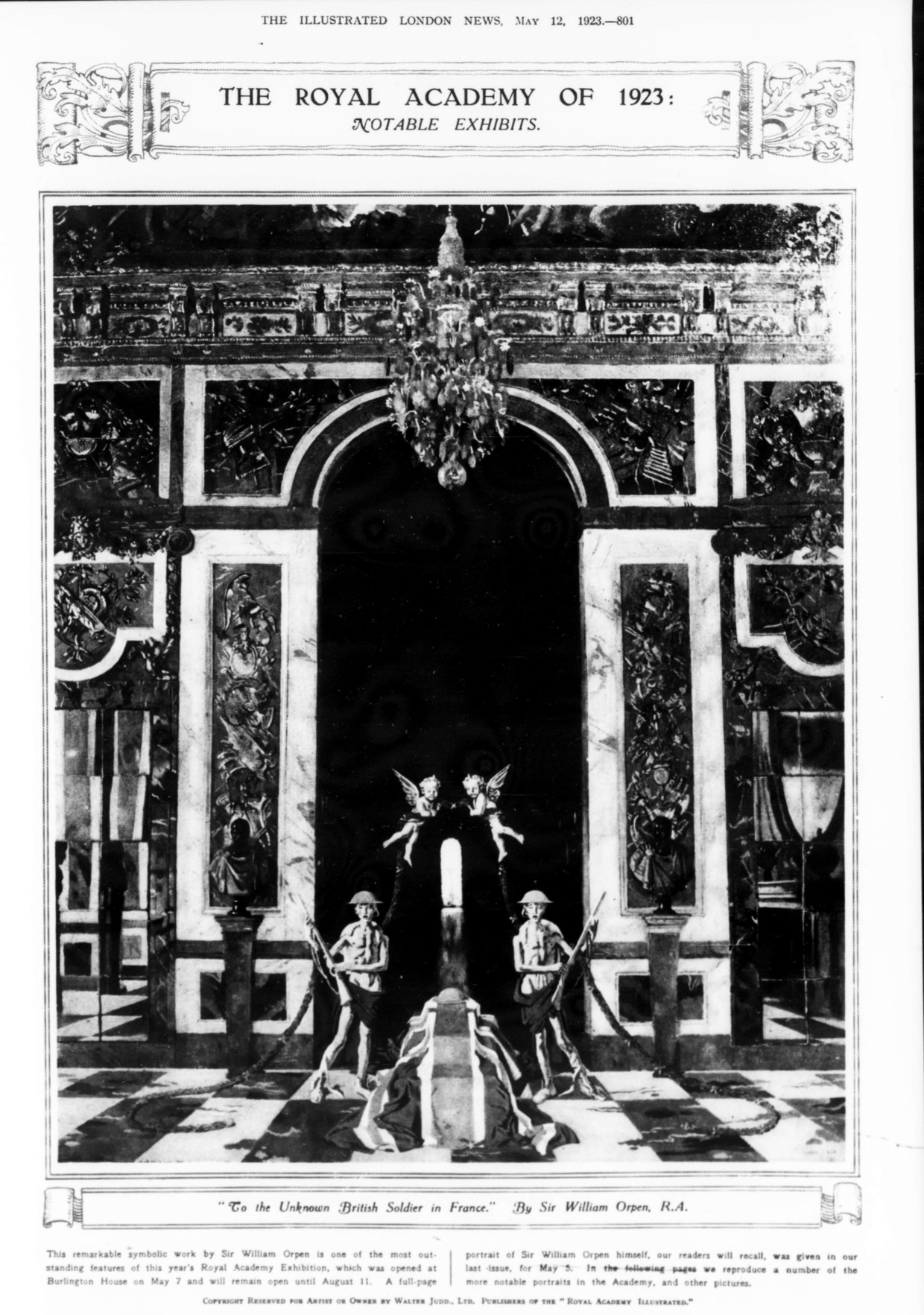
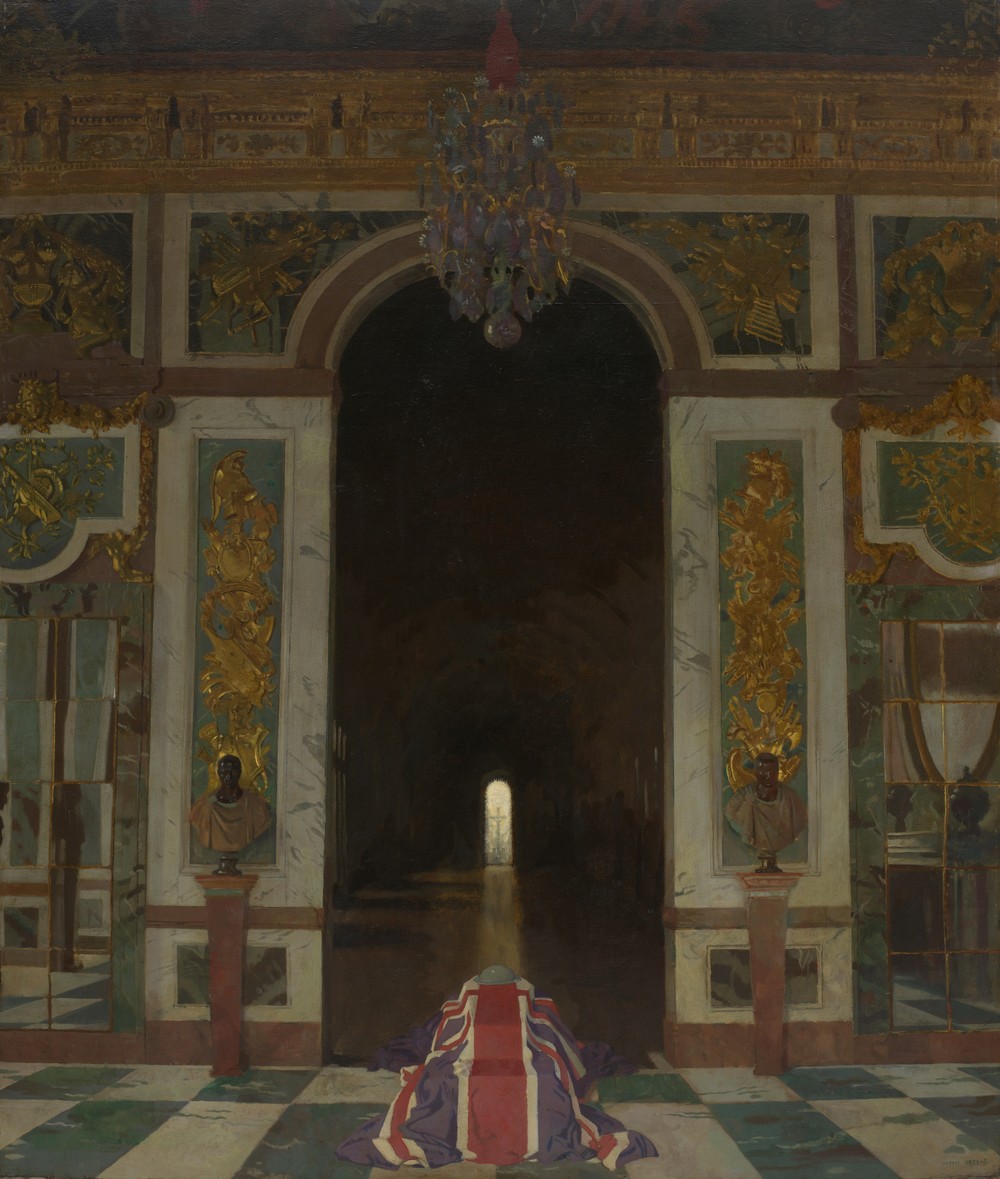
“So I rubbed all the statesmen and commanders out, and painted the picture as you see it—the Unknown British Soldier in France, guarded by two dead comrades.
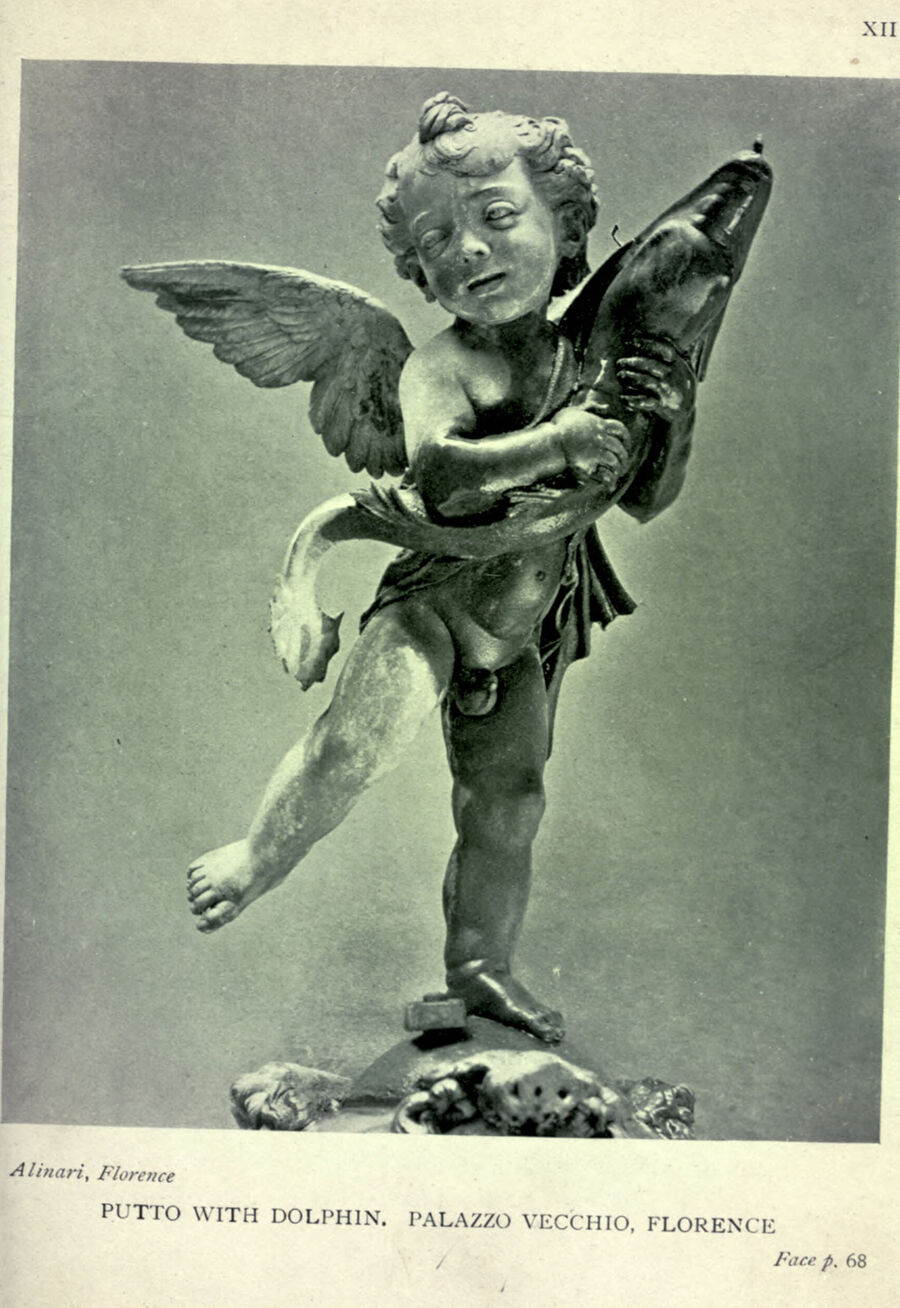
“The long dark room behind them is the Hall where the Treaty was signed. The cherubs? Well, I should not call them cherubs, nor did I feel that they conflicted with the mood of the picture as a whole. But, whether I was right or wrong in that, you must believe that I painted it in all seriousness and in all humility. I have satirized nobody, nor did I intend to set any problem. All the meaning is in the title of the picture itself. ‘To the Unknown British Soldier in France.’”
«Я согласился написать три картины Мирной конференции для Имперского военного музея. Две из них — конференция на Кэ-д’Орсе и подписание Договора в Версале — уже в музее. Третья должна была изображать комнату в Версальском дворце, которая называется Салоном Мира, — ту, через которую входят в длинную Зеркальную галерею, где был подписан Договор. Было условлено, что я соберу там политиков, генералов и адмиралов, выигравших войну. Я сделал с них этюды; я написал комнату, а потом расставил в ней всех тридцать девять — или сколько их там было. На это ушло девять месяцев непрерывной живописи — тяжёлая работа. А потом, знаете, я не смог продолжать. Всё это вдруг показалось каким-то неважным рядом с действительностью, какой я видел и чувствовал её, когда работал при армиях. Несмотря на всех этих выдающихся людей, я всё думал о солдатах, которые остались во Франции навсегда. Заслуживает ли Салон Мира своего имени или нет — впредь он может заслуживать его лишь в той мере, в какой его дали ему они. И я стёр всех государственных мужей и полководцев и написал картину такой, какой вы её видите, — Неизвестный британский солдат во Франции под охраной двух мёртвых товарищей. Длинная тёмная комната за ними — зал, где был подписан Договор. Херувимы? Что ж, я не назвал бы их херувимами и не чувствовал, что они спорят с настроением картины в целом. Но прав я был в этом или нет, поверьте: я писал её со всей серьёзностью и со всем смирением. Я никого не высмеивал и не собирался задавать загадок. Весь смысл — в самом названии картины: „Неизвестному британскому солдату во Франции“».