Not every museum in the city, but those that can open new worlds, point to genuine masterpieces, sharpen the mind and move the soul. Every entry carries our own rating of the collection, what matters most here, a minimum route to the essentials, when to come to avoid the crowds and what it costs. Every entry is dated with its last check.
?Lacquer miniature of four schools and propaganda porcelain — the objects by which Russia is recognisable in world decorative art. The material is first-rate; the display is not up to it.
Lacquer miniature — Palekh, Fedoskino, Mstyora, Kholuy; Soviet propaganda porcelain; toys of the peoples of the world; embroidery and samovars.
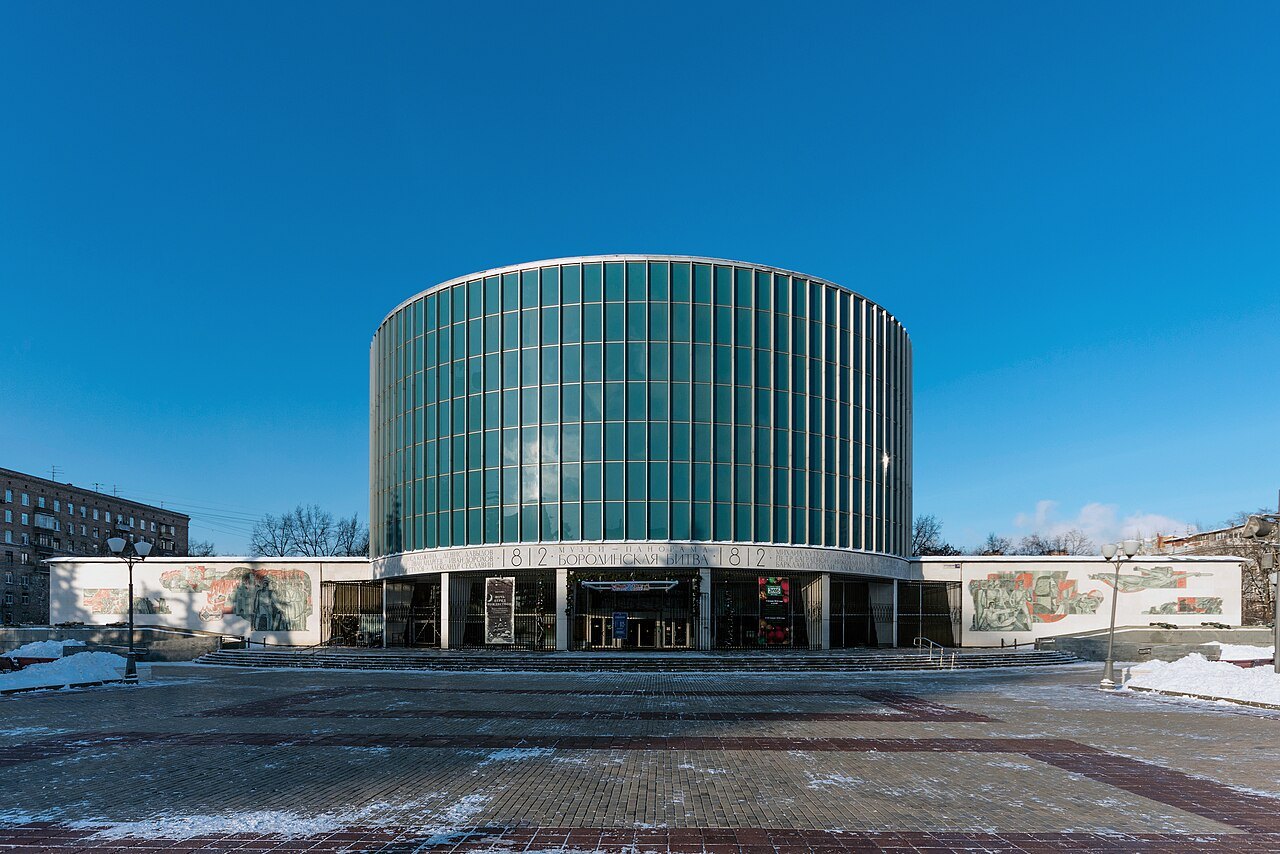
?Roubaud’s panorama is one of the few survivors of a genre that was the summit of 19th-century visual culture and has almost entirely vanished. The value lies in the machinery of the spectacle, not in the subject: this is how people looked before cinema.
Franz Roubaud’s Borodino panorama of 1912: 115 metres of canvas in the round, 15 metres high. Next door, the Kutuzov hut where on 1 September 1812 the council of war decided to abandon Moscow.
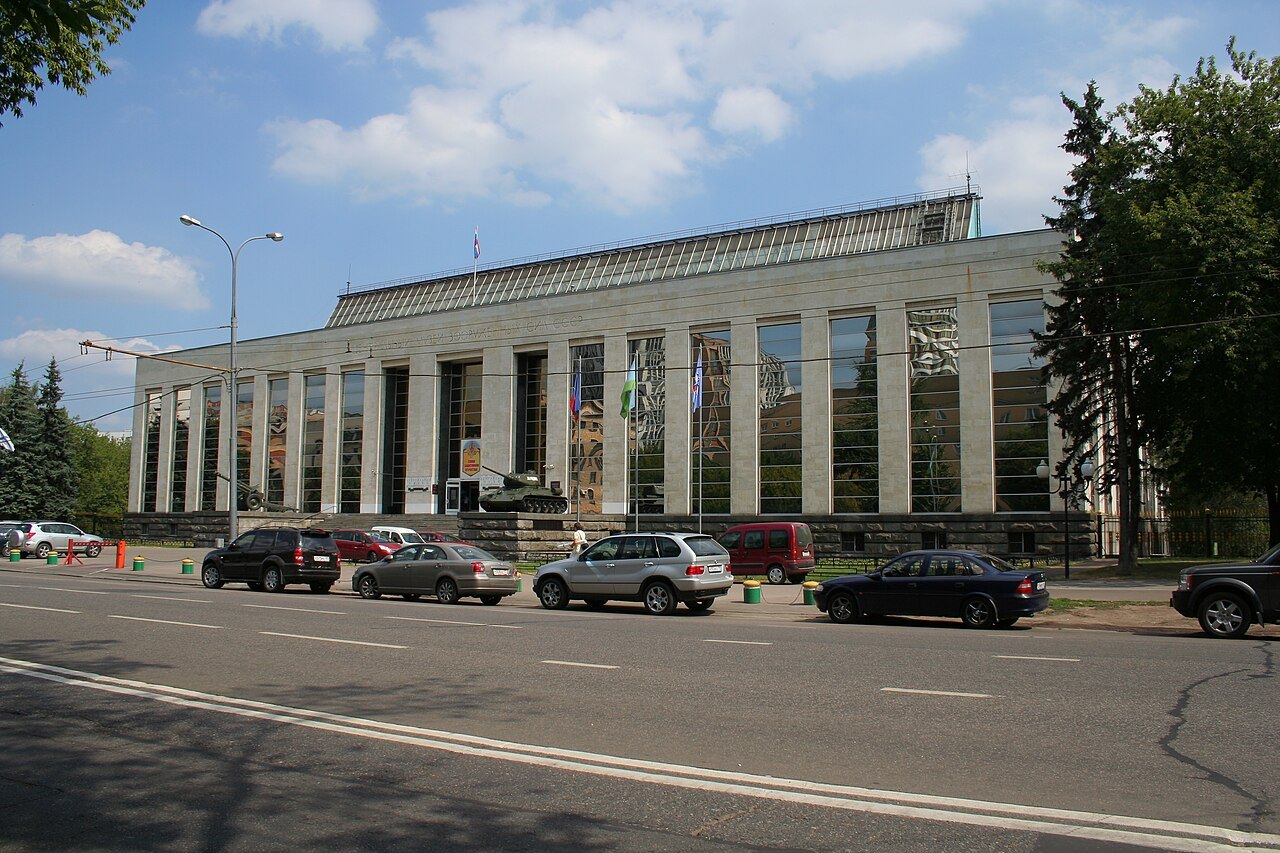
?The only place where the Victory Banner is the original rather than a copy, and where the wreckage of Powers’s U-2 can be seen. Everything else is a large but unremarkable military collection.
The original Victory Banner raised over the Reichstag; wreckage of the Lockheed U-2 of Francis Gary Powers, shot down near Sverdlovsk on 1 May 1960; over 150 machines outdoors.
Sovetskoy Armii 2, bldg 1 ·today 09:00–17:452–3 hours7+wheelchair — partly
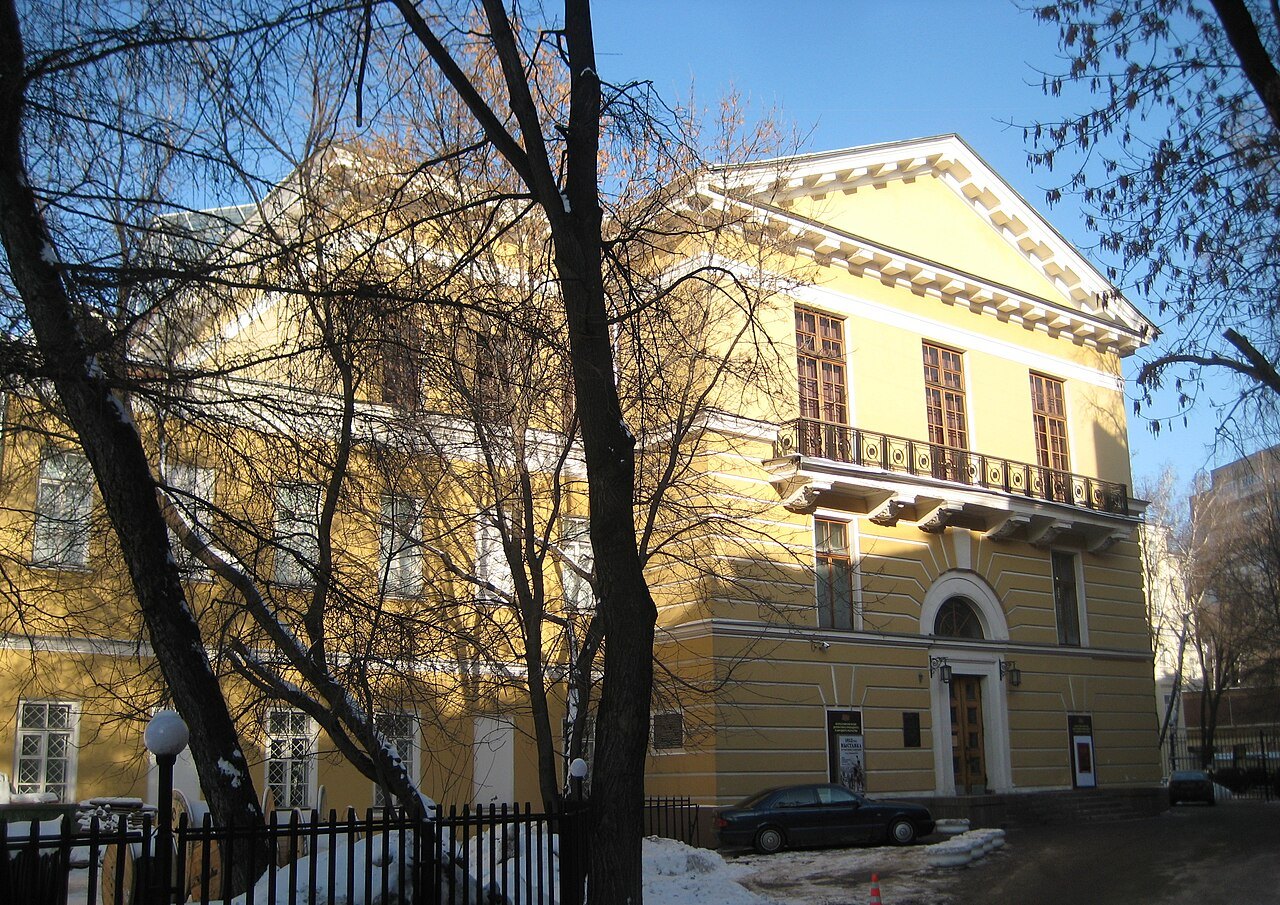
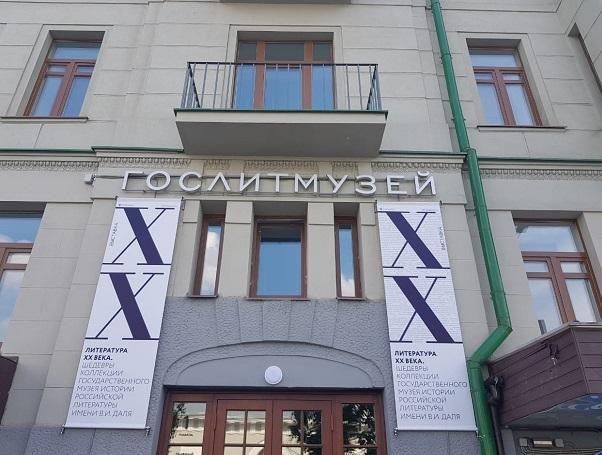
?The only museum built not around a single name but around literature as a process. Hence its strength — comparisons impossible in a house museum, and a fund of 700,000 items that makes such comparisons possible.
The permanent display Zubovsky 15: a house of science, literature and art, and the exhibitions on 20th-century Russian letters.
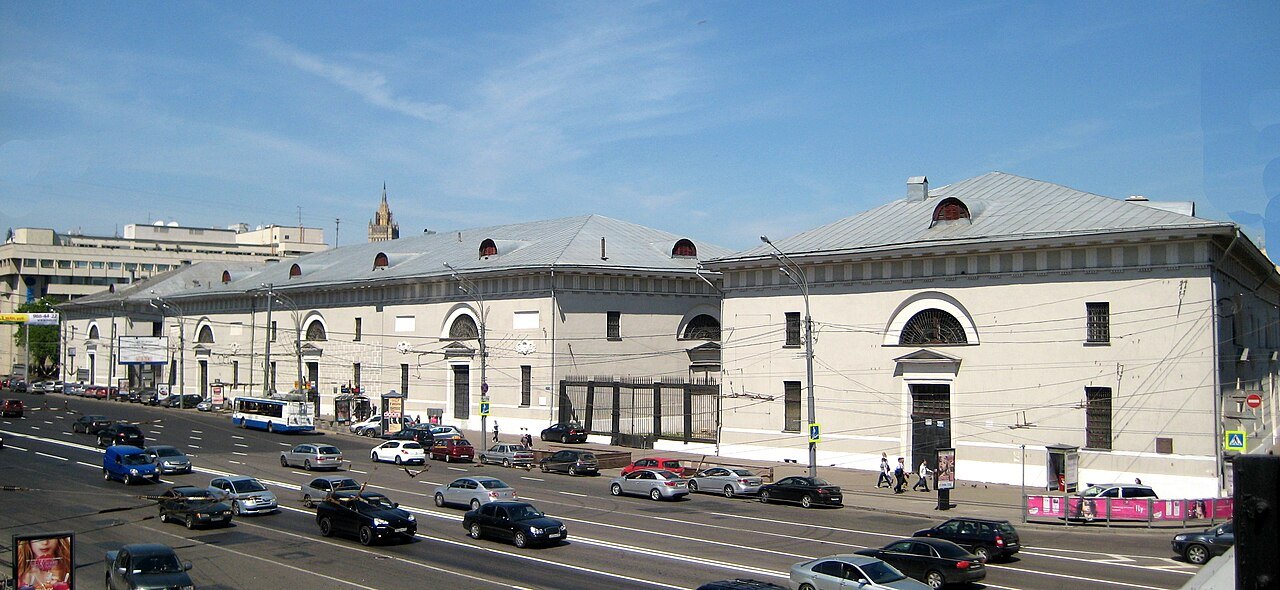
?A city museum — an ordinary genre in Europe — but the material is unique in scale: a million objects about one city. The value is also the Provision Warehouses by Stasov, a model Empire building rarely accessible from inside.
The permanent display History of Moscow: the archaeology of Moscow soil, town life, plans and views of the city by century. And the Provision Warehouses themselves, an Empire monument after Vasily Stasov.
?The oldest museum of evolution in Russia, built around an idea rather than around a case of stuffed animals: Kots collected proofs of variability, and the display serves the proof. It cannot match Vienna or Berlin for material, but its way of arguing stands on its own.
Early 20th-century taxidermy by Filipp Fedulov, among the finest anywhere; the collection of albinos and melanists gathered by Kots as visible proof of variability; the Living Planet hall.
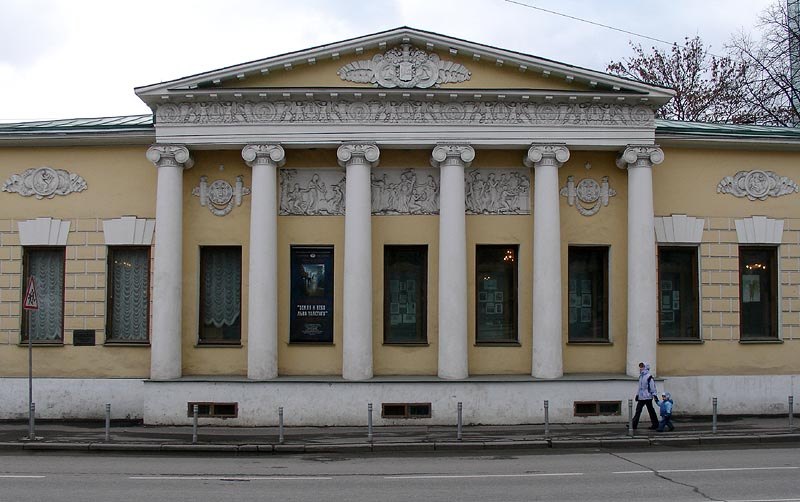
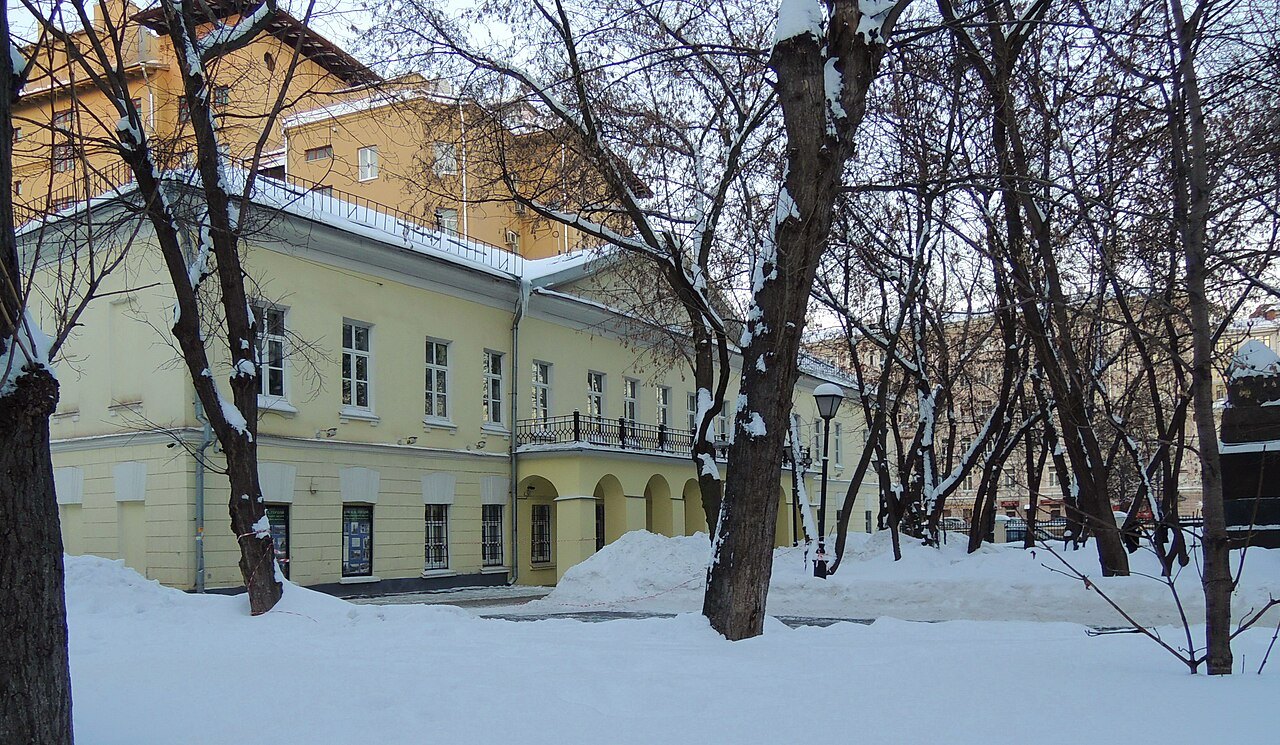
?The only memorial museum of Gogol in the world, in the authentic walls of his last four years. The value is topographic: the room, the fireplace and the staircase give what no edition can.
Six memorial rooms; the fireplace in which, on the night of 12 February 1852, Gogol burned the manuscript of the second volume of Dead Souls.
Nikitsky Boulevard 7a ·today 12:00–19:001 hour9+wheelchair — no
?The largest manuscript fund of any single writer in the world. The value is scholarly: you see how the text was made — Tolstoy rewrote a sentence ten times, and you can watch it happen. For the house he lived in, go to Khamovniki.
Manuscripts in Tolstoy’s hand, first editions, portraits and photographs of the writer and his family. The display follows the books, from Childhood to Resurrection.
Prechistenka 11/8 ·today 11:00–18:001.5 hours10+wheelchair — no
⤢Bernt Rostad uploaded and derivative work: MrPanyGoff, CC BY 2.0 · Wikimedia Commons
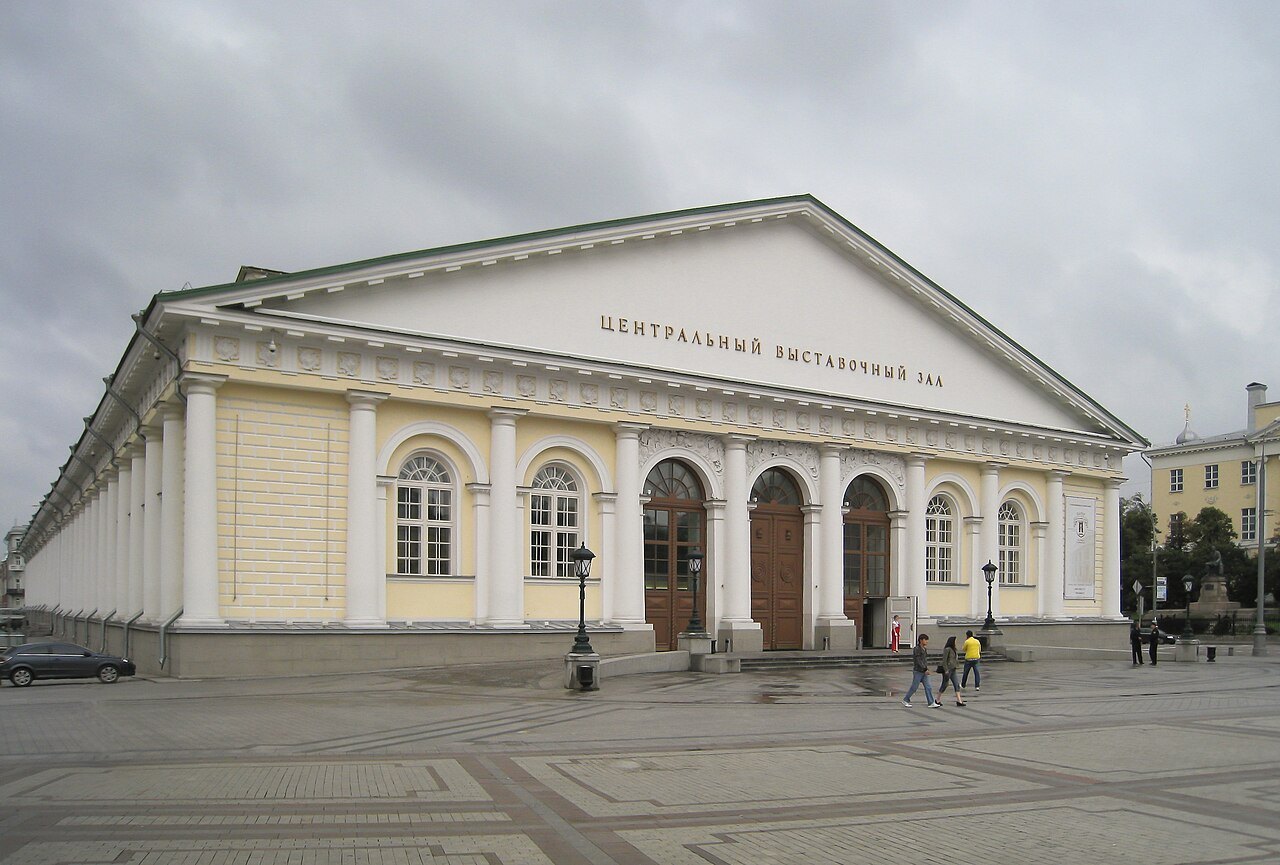
?There is no collection; the value is entirely engineering — a column-free span of nearly 45 metres calculated by Betancourt, a monument of engineering thought with few equals in Europe. Everything else here is temporary.
The building itself: a column-free hall spanned by timber trusses of almost 45 metres, calculated by the engineer Agustín de Betancourt — a rare monument of engineering.
?The oldest surviving secular building in Moscow. The value is in the vaults themselves: almost no 16th-century interiors are left in the city, and these were recovered by Baranovsky, the restorer who saved half of it.
The Treasury Chamber with its 16th–17th-century interior and the original vaults; the display on Russian–English trade and finds from the Zaryadye digs.
Varvarka 4a (Zaryadye Park) ·today 12:00–20:0045 minutes8+wheelchair — no
We give the rating ourselves and answer for it: it is about the value of the collection, not the size of the building, the visitor numbers or the fame of the name.
world-class
In the same rank as the world's leading museums.
outstanding
A strong collection: worth setting aside a day for.
significant
There are things here worth seeing.
for enthusiasts
Of interest to those already drawn to the subject.
niche
Valuable to a narrow circle, without wider recognition.
How we keep this list
Checked on 15 August 2026 — against museum websites and open sources. Every entry carries its own date of checking and what it was checked against. A price we could not confirm we say so, rather than leaving the old one.
Time needed is for the essentials, along our minimum route, without the café, the shop or the cloakroom queue. Going through the whole museum almost always takes longer.
The photographs come from Wikimedia Commons under free licences; the author and the licence are given under each one.
18 May is International Museum Day (since 1977), and the night of 17–18 May is Museum Night. On those days museums keep different hours and are often free.
Found a mistake?
We answer for every figure and date on these pages. If a museum has changed its hours or its prices, if a link has died, or if you think a museum is missing from the list — write to us. We will correct it and set a new date of checking.





_by_shakko_01.jpg)